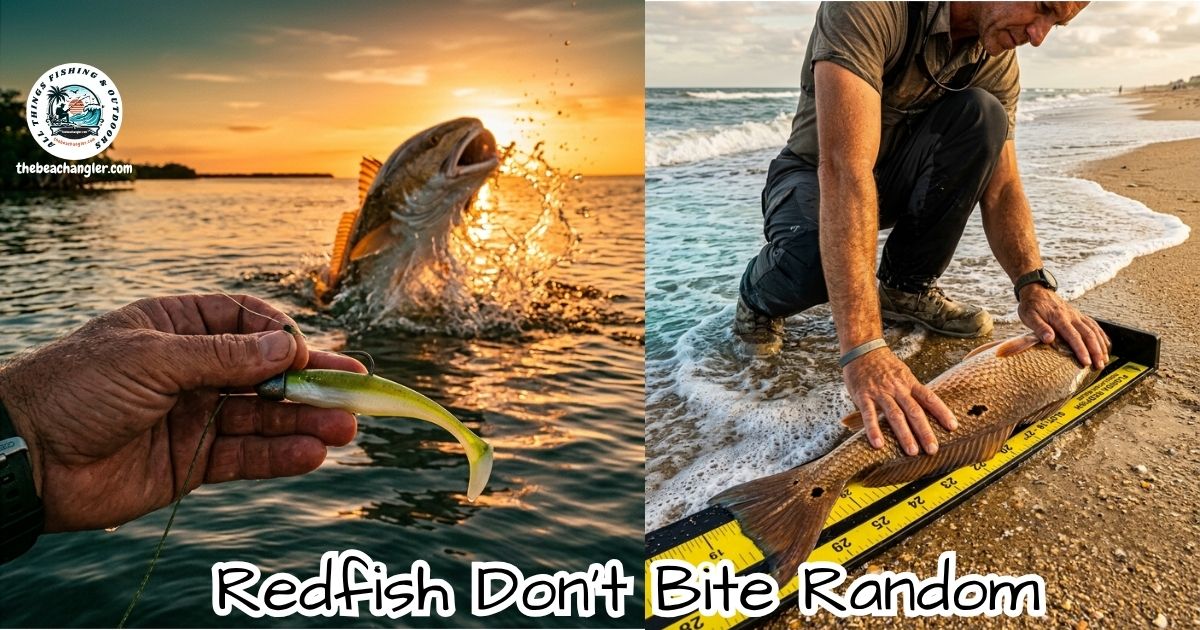
Many anglers think redfish bite without rhyme or reason, but after years on the marsh, I’ve realized there’s much more happening below the surface. Figuring out redfish behavior leads to better catches and fewer slow days. Redfish are consistent creatures; their feeding follows patterns once I know what to keep an eye out for. These patterns are tied closely to water movement, food sources, and surrounding structure—luck rarely plays a part.
How Redfish Patterns Work
Redfish survive by being efficient. Most of their movements revolve around finding food without burning too much energy. I’ve noticed that redfish hardly ever move without reason. They stick to spots that naturally bring food to them.
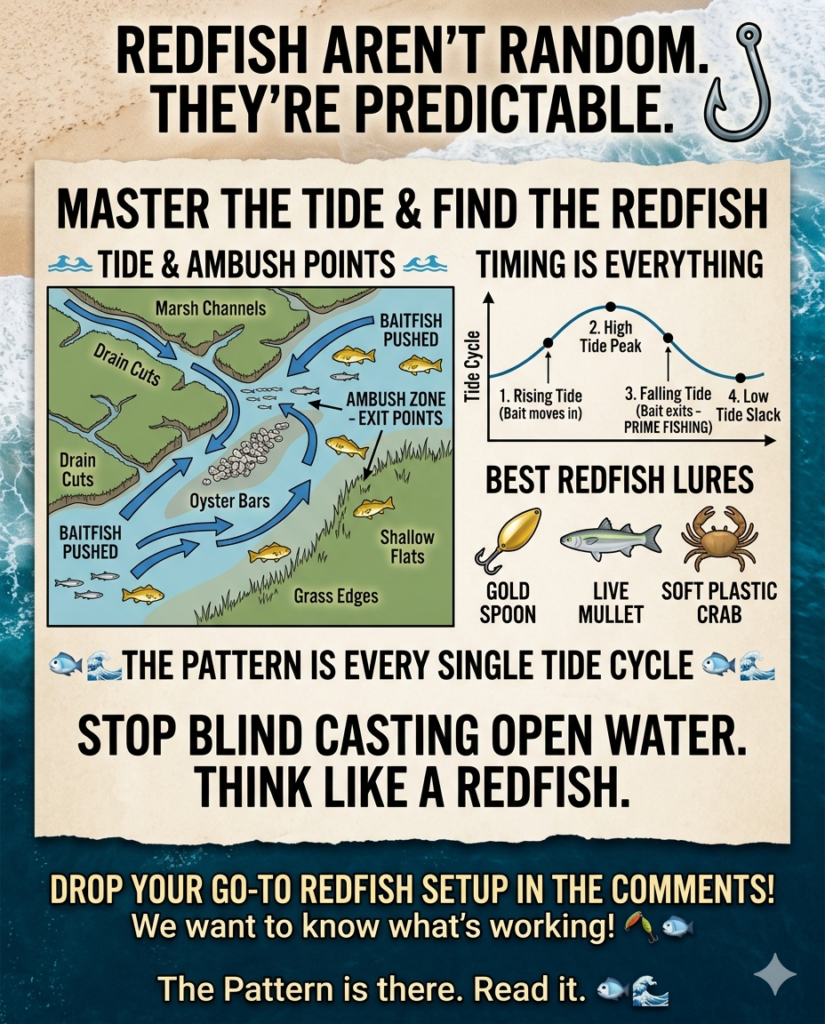
In much of the coastal U.S., tides shape these areas. Baitfish, shrimp, and crabs become accessible when water washes over, then pulls back from mudflats, grassy edges, or oyster bars. Redfish settle in these ambush spots, and these patterns repeat day in and out.
If I fish randomly, ignoring these ambush points, I catch way fewer fish. When I focus on places where water pushes bait toward something, results show up consistently. These patterns aren’t mysterious once the dots between water, food, and fish connect in my head.
Finding Productive Structure for Redfish
Learning to read water is one of the best skills I’ve built as a redfish angler. Not all structure is the same. I look for funnels, cuts, and drains where water squeezes through as the tides drop. Those narrow spots bunch up bait and concentrate redfish, making fishing more productive.
The back edges of a flat or mouths of marsh drains form my go-to starting points. Spots with oyster bars, grass lines, or even submerged debris tend to hold even more fish. Sometimes, the structure is as subtle as a shallow dip next to a sandbar or a thinner trough between patches of grass. Redfish use these areas to ambush prey with little warning.
I focus on these places during moving tides, since sitting tight during slack water doesn’t trigger much feeding. A quick look at low tide helps me spot features that will hold fish when the water returns. I take notes and snap photos to remember where those hidden dips and ledges are for next time.
Matching Baits to the Pattern
Choosing the right bait is about more than brand or color—it’s about keeping it in the strike zone as long as possible. Gold spoons, soft plastics, and live shrimp all work if moved slowly, right along the bottom or near good structure. Redfish react more to a steady target than one that zips by. I try to keep my bait where fish are waiting, not just moving it through open water.
A Carolina-rigged mullet or mud minnow shines near drain points. On clear days, a weedless gold spoon dragged by oyster bars covers water without snagging and often gets bites. Soft plastic crabs or shrimp on a light jighead are excellent for bottomfeeding redfish. Slowing down and keeping my lure near structure or current seams where food piles up has become my rule.
I’ve found success using scented soft plastics on days with murkier water, especially after rain. The smell helps redfish find the bait even when they can’t see clearly. Adding just a touch of natural bait sometimes makes a big difference, especially if the water is dirty or the redfish seem wary.
Adapting to Tides and Seasons
Redfish patterns switch up with each tide stage and season, but their core behavior stays the same. At the start of the outgoing tide, water pulls bait off the flat. Redfish station themselves where food funnels by—usually the first drop-off, mouth of a drain, or around oyster points.
On incoming tides, I key on the front edge where fresh water covers a grass flat or fills up shallow spots. Redfish move up to chase shrimp and small fish that appear suddenly in these new areas. When the seasons change, so do the patterns.
Cooler months bring redfish together in deeper holes for warmth, but they still feed near channel edges or exposed structure. In warmer stretches, they cruise skinny water, especially when baitfish are everywhere. Keeping track of water temps and following bait tells me how to game plan my outing, but structure, current, and food movement always get priority.
Challenges Anglers Face With Redfish Patterns
Patterning redfish can bring more hookups but also a few bumps along the road. Water clarity, wind, and fishing pressure often mix things up. When water turns muddy, I use darker baits or ones that make noise, such as rattling spoons or paddle tail plastics, so redfish can home in on them through vibration. On windy days, I focus on leeward points or protected creeks—since redfish still have to eat and will gravitate toward comfortable areas where they can see what’s happening.
When popular spots get crowded, redfish tend to slip off to deeper areas or less obvious pieces of structure. Instead of fighting the crowd, I search for small drains or overlooked cover farther from the busiest parts. Even small changes in current or shade lines can hold fish avoiding the rush.
Water Movement
Feeding connects directly to water movement. If tides are especially weak, fishing naturally gets tougher. I try to hit spots when the current is rolling, right after the tide flips direction. Small bait schools gather at these times, and redfish set up to feed. Even on slow tidal days, a bit of wind can push bait and water against the downwind side of a flat, making an easy feeding lane for hungry fish.
Reading Bait Activity
My redfish success is linked to picking up on the small signals: nervous mullet darting, shrimp popping nearby, or quick flashes around a grass line. If bait bunches up near something solid, I slow down and make extra casts there. Ignoring these signs often leads to missed fish—I’ve learned to let the live bait do the talking.
Simple Advanced Tactics That Have Worked for Me
After getting a handle on where and why redfish hang out, a handful of extra tricks took my success up a notch:
Mark Tidal Bite Windows: I record peak bite times in a notebook or phone app, tracking the strongest water movement for that area. Patterns stand out fast and repeat themselves, letting me show up right as the action kicks off.
Scent and Sound Combination: Switching to scented lures or pairing noisy baits with scent makes it easier for fish to find them in murky water. Sometimes adding just a sliver of shrimp does the trick.
Move In Quietly: Being stealthy matters; I try to avoid making extra noise around the skiff, poling or paddling quietly when getting close. Redfish spook easily, especially in skinny water, and even a single clank can send them scattering. Quiet approaches get more bites.
These tweaks, layered on my knowledge of feeding spots and tides, have meant more redfish in the boat with less guesswork about where to cast.
Frequently Asked Questions
Why do redfish stop biting even when the conditions look perfect?
Bites often pause during slack water, when tides rest and not much is moving. Both bait and redfish go less active. When current returns, the action follows. Until then, I target deeper or shaded areas to find occasional feeders.
How important is bait selection compared to location?
Location leads every time. No lure can produce if there aren’t redfish around. Once I’m set up in the right spot, matching the bait to what the redfish expect—be it mullet, crab, or shrimp—boosts my odds, especially if I place it tight against structure.
Do redfish feed better at certain times of day?
Feeding highs depend more on current than on the hour. Mornings and evenings are solid bets, but midday can be just as productive if the tide is right and bait activity is visible.
Real-World Situations Where Redfish Patterns Matter
Few things are as sweet as showing up to a marsh and calling your shot because you recognize the pattern. Not long ago, one crisp Louisiana morning as the tide drained off a flat, I set up at a drain and aimed my jig at swirling water. The second cast paid off with a heavy thump—redfish on the line. Pattern recognition like this keeps fishing fun and productive.
In Texas winter holes, I’ve learned to pitch right up on sunny ledges the moment they warm, as redfish will climb up for a meal. Matching what I see on the water with a mental library of patterns saves time and puts more fish in the boat. Anglers who jot notes and tweak their approach for unique spots almost always see improved results.
- Shallow Marsh Channels: Standout locations during falling tides, pulling in bait and the redfish with them.
- Oyster Bar Edges: Hard bottom meeting sand or mud stacks up food, bringing redfish in with the moving current.
- Backwater Drains: When water drops, redfish hunker down in these depressions, waiting for the tide to flip and bring the next meal.
Key Advice for Reading Redfish Patterns
Patterned fishing keeps angling interesting and the results steady. By staying patient, keeping an eye on the water, and adjusting based on bait, current, and structure, I’ve taken my redfish game up a level. The more I pay attention to the little details, the steadier the action.
Seeing redfish as following patterns instead of moving randomly lets me make better use of my hours on the water. There’s satisfaction in cracking the code and knowing that every tide holds a reliable pattern waiting to be solved.
Check Out Our Most Recent Articles:
- Best Surf Rods Under $150

- Targeting Tarpon In The Surf
- Secrets To Finding And Catching Snook
- 4 Tips for Targeting Striped Bass In The Surf
- Live Bait Vs Artificial Lures In The Surf
- The Reel Everyone Recommends Vs. The Reel That’s Built For Saltwater
As always, stay safe, enjoy the journey, and please try to leave it cleaner than you found it. If you have any comments, questions, ideas, or suggestions, please leave them in the comment section below, and I’ll get back to you ASAP. You can follow us on Facebook: Rex The Beach Angler, Instagram: thebeachangler7, Twitter: @AnglerBeach, and YouTube: Man Art Creations.
P.S. Thanks so much for checking out our blog; we really appreciate it. Just so you know, we may receive a commission if you click on some of the links that appear on our site. This helps us keep our content free and up-to-date for everyone. We appreciate your support!





A life long surf fisherman with 50+ years of experience, I am also an avid hunter and outdoorsman. I will be sharing my passion for the outdoors with you so be prepared for hunting, fishing, camping, hiking and more. Along with gear reviews and the latest trends and innovations in the outdoor industry.