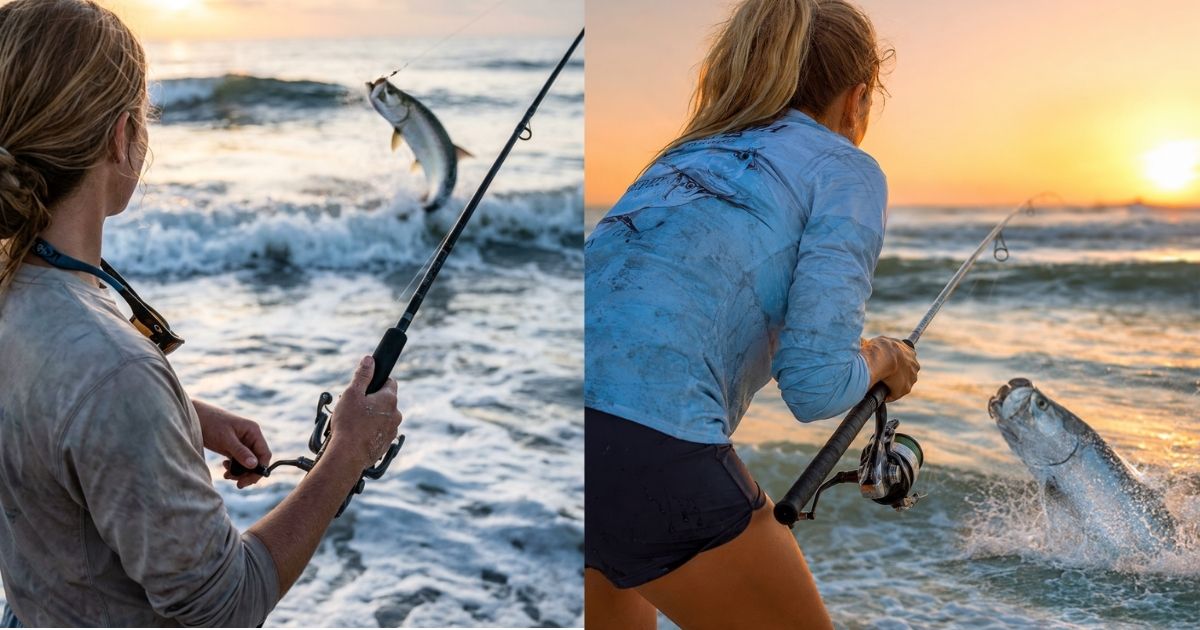
Watching silver tarpon rolling in the surf always grabs my attention, but I see a lot of anglers walk right by them, not even aware of the chance to hook one up. Tarpon come close to shore when the weather warms, chasing baitfish that hug the beach.
These massive fish aren’t out where boats go. They’re right in the first and second trough, often within easy casting range. Targeting tarpon in the surf gives me a shot at the kind of fishing most people only hear about, right from the sand.
Understanding Surf Zone Tarpon Behavior
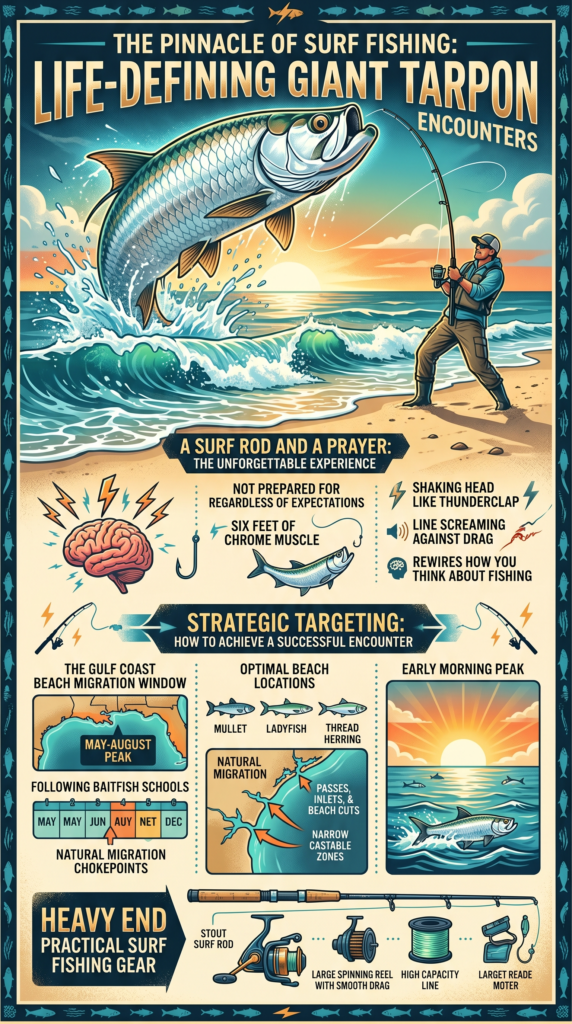
Tarpon move into the surf zone for a reason. They’re following the food. Baitfish like mullet and sardines pile up along the beach, and tarpon shadow them in waves as shallow as waist deep. Sometimes, all I need to do is walk the beach just after sunrise or during an incoming tide and watch for the telltale flashes or rolls. This is the best way I’ve learned to spot tarpon without using a boat. Knowing what triggers their movement and recognizing the signs helps me make every cast count.
Tarpon are most active near sunrise and sunset but will sometimes roll and feed right through midday if conditions are right. I look for calmer surf, clean water, and big schools of bait. Any silver flash in the waves or a burst of spray where bait jumps tells me there are predators in the area.
Once I spot one roll, I slow down, watch the pattern, and try to figure out which direction they’re traveling along the beach. Occasionally, I check the tide charts and moon phases since tarpon behavior often links up with these natural cycles—when the tide pushes in bait, it usually brings in the tarpon as well.
Something else I’ve noticed is the way small changes on the beach, such as new cuts in the sandbar or sudden drops, will concentrate baitfish. Tarpon quickly find these spots and use them as ambush points. I make a habit of keeping an eye on these features because every day can bring something new.
Getting Started: Gear for Surf Tarpon
My gear for surf tarpon is simple but tough. A medium-heavy spinning rod in the 8 to 9 foot range gives me the distance and leverage I need. I pair it with a saltwater spinning reel that holds at least 300 yards of 30 to 50-pound braided line. This lets me handle the first blistering run without running low on line.
Leader is one of the most important parts of my setup. Tarpon mouths are abrasive and will rub through light line quickly. I always tie on at least 60 to 80-pound fluorocarbon leader, even if the water is clear. I connect it to my main line with a strong knot, usually a double uni or FG knot for a low-profile connection that slides through my guides without snagging.
- Rod Length: 8–9 feet for longer casts and better control
- Reel: Saltwater spinning, size 6000–8000
- Main Line: 30–50 lb braid
- Leader: 60–80 lb fluorocarbon
This setup turns the odds in my favor when a big tarpon decides to take off down the beach at full speed. For comfort during long fishing sessions, I bring a sturdy sand spike for my rod and pack a belt pouch with my release tools, a few spare hooks, and some snacks. A pair of polarized sunglasses is another essential, making it easier to spot fish movement even on bright days.
Choosing the Best Bait and Presentation
I’ve learned that tarpon in the surf want a natural, slow-moving bait that drifts with the current. My go-to baits are live mullet, pilchards, pinfish, or live crabs. If live bait isn’t available, fresh cut ladyfish or mullet chunks also work well. I rig these on a 6/0 to 8/0 circle hook, threading the bait so it stays lively but secure.
Presentation makes a huge difference. I keep the rig simple and use a fishfinder or Carolina rig with just enough weight to hold bottom without dragging. On calmer days or with lighter baits, I sometimes skip the weight entirely and freeline my bait. This lets it move naturally in the current; a look that hungry tarpon can’t resist.
- Live Bait: Mullet, pilchard, pinfish, crab
- Cut Bait: Ladyfish or mullet chunks
- Hook: 6/0–8/0 circle hook for safe, strong hookups
- Rig: Fishfinder or Carolina, or sometimes freeline on calm days
Getting the drift right is really important. Too much weight or resistance, and tarpon will turn away. Let the current and bait do the work here. If I’m forced to use artificials, I pick large swim baits or suspending plugs that closely match the size and color of local baitfish, working them slow and steady through possible holding areas. Sometimes a slow, steady retrieve right through a school of mullet is just the thing to trigger a reaction strike.
Reading the Surf and Spotting Tarpon
Every time I hit the beach looking for tarpon, I pay attention to what the water is telling me. Tarpon like the troughs, which are the deeper sections just past the shore break and before the outer sandbar. These areas trap baitfish, making them perfect ambush spots.
Early morning or evening often brings the most activity, but I’ve caught tarpon even in broad daylight if the bait is thick enough. I walk slowly, scanning the surf for rolling fish, flashes of silver, or sudden commotions where bait is breaking the surface.
On flat, calm mornings, tarpon rolls stand out clearly. When there’s some wave action, I look for any underwater shadows or abrupt movement under schools of bait. Sometimes, pelicans and gulls diving is another giveaway that something big is pushing bait to the surface.
Cloud cover and light wind can actually help me spot fish, since glare is reduced. I also make the most of high ground such as beach stairs, lifeguard towers, or dunes for a better vantage point. Quiet observation beats stomping along the sand, since tarpon seem to spook easily in shallow water. Being patient here nearly always pays off, especially if bait schools are thick and the birds are working nearby.
Staying Flexible and Handling Surf Conditions
Surf conditions switch up all the time, and tarpon react to them. Clean water is best, but a little swell or a mild onshore wind doesn’t put them off. I avoid fishing during muddy water or heavy surf, since it’s harder for tarpon to see prey, and it’s tough for me to spot them. If the wind picks up or the surf starts to get rough, I adjust by adding a little more weight to keep my bait where it belongs or by moving to a section of beach that’s sheltered by a point or pier.
On calm days, I go lighter. Freelining live bait produces the most natural presentation, especially when the current is gentle. When the surf is rough or the current strong, I use a heavier sinker but keep the leader as long as possible to let the bait roam.
Flexibility helps me keep my bait in the zone where tarpon are actively feeding. Sometimes, tides and wind combine to stack up seaweed along the shore, so I switch up my retrieve or move to a cleaner section for better results.
Surf Tarpon FAQs
What’s the best time of year to find tarpon in the surf?
Peak season varies but is often late spring through early fall, depending on the region and bait migrations.
Do I have to use live bait to catch tarpon in the surf?
Live bait usually works best, but fresh cut bait is a good backup. Occasionally, large artificial lures that mimic fleeing baitfish can trigger strikes, especially if tarpon are actively feeding.
How strong does my leader really need to be?
I recommend at least 60 to 80-pound fluorocarbon, even though it’s thick. Big tarpon shred lighter leaders on the first run, so going heavier keeps me in the game longer.
Can I catch tarpon on a regular surf rod and reel?
It’s possible, but dedicated tarpon gear gives a better shot at landing bigger fish and helps avoid long battles that could harm the fish.
Tips for Hooking and Landing Tarpon in the Surf
Getting a tarpon to bite is just the start. Once I feel that steady pull or see my line start to move off, I resist the urge to set the hook hard like with other fish. With circle hooks, letting the fish run and then coming tight is all I need to do. The hook slides into the corner of the mouth as the tarpon swims away, making for a secure, safe hookup.
This is where the real test comes in. Tarpon in the surf explode with jumps, runs, and head shakes, making every hookup a wild experience. I keep my drag set firm but not locked down. If the fish jumps, I lower my rod tip to give it slack, helping keep the hook set. When tarpon start running parallel to the beach, I walk with them to avoid breaking off on structure or losing line to the waves.
After a long fight, I always handle tarpon carefully, keeping them in the water as much as possible. I remove the hook with a pair of pliers, revive the fish if it needs it, and watch it swim away. Not only is this more ethical, but tarpon are a prized sport species, and keeping them healthy means more chances for everyone in the future.
Bringing a buddy along helps with landing and releasing your catch, especially when the surf is tricky or you’re handling a really big fish. Sharing these moments makes for lifelong memories, and photos in the surf are always next-level cool.
Final Thoughts on Surf Tarpon Action
Tarpon are special. Sometimes living more than 80 years and growing to over 250 pounds. For me, seeing a five-foot silver fish roll just yards from shore always gets my heart pounding. Once I knew how to spot the signs and set up my bait just right, surf tarpon quickly became my favorite inshore target. If you’ve ever walked the beach and seen those silver flashes without knowing what you were looking at, next time bring a rod, keep an eye out, and get ready for one of the wildest fights available from the sand.
Check Out Our Most Recent Articles:
- Best Surf Rods Under $150
- Targeting Tarpon In The Surf
- Secrets To Finding And Catching Snook
- 4 Tips for Targeting Striped Bass In The Surf
- Live Bait Vs Artificial Lures In The Surf
- The Reel Everyone Recommends Vs. The Reel That’s Built For Saltwater
As always, stay safe, enjoy the journey, and please try to leave it cleaner than you found it. If you have any comments, questions, ideas, or suggestions, please leave them in the comment section below, and I’ll get back to you ASAP. You can follow us on Facebook: Rex The Beach Angler, Instagram: thebeachangler7, Twitter: @AnglerBeach, and YouTube: Man Art Creations.
P.S. Thanks so much for checking out our blog; we really appreciate it. Just so you know, we may receive a commission if you click on some of the links that appear on our site. This helps us keep our content free and up-to-date for everyone. We appreciate your support!





A life long surf fisherman with 50+ years of experience, I am also an avid hunter and outdoorsman. I will be sharing my passion for the outdoors with you so be prepared for hunting, fishing, camping, hiking and more. Along with gear reviews and the latest trends and innovations in the outdoor industry.