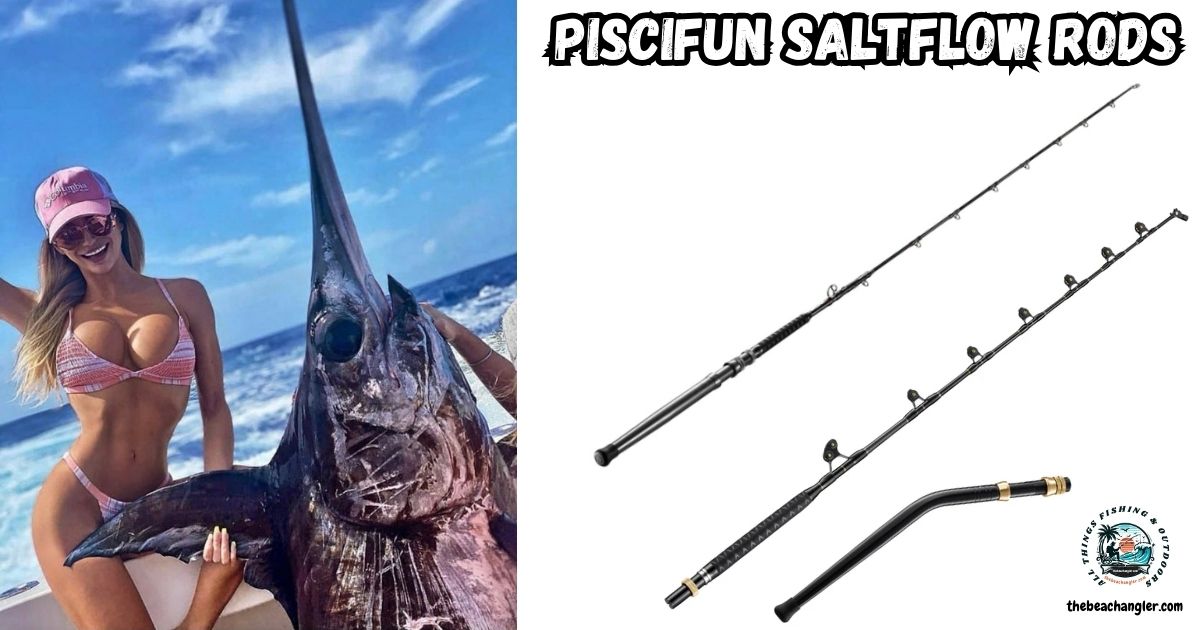
Piscifun’s Saltflow rod caught my interest as someone who regularly jumps between value and performance-driven gear for saltwater outings. The Saltflow stands out as a midrange offshore rod that gets people talking, both for what it delivers and what some anglers wish it offered. Here’s a straightforward breakdown of how the Piscifun Saltflow fits into saltwater fishing, from build details to real-world use—and what sets it apart among competitors.
QUICK LOOK: Key Features of the Piscifun Saltflow Rods
- CG1 Composite Blank: The Saltflow uses a proprietary blend of carbon fiber and fiberglass, which means it’s designed to be both strong and a bit forgiving, resisting twists and breaks when hooked up to a big tuna or grouper. This mix aims to give a fighting chance even during the most stubborn runs.
- Saltwater Ready Components: Sea Guide CNC aluminum reel seats and metal butts feel sturdy and are engineered to stand up to salt spray and constant use. These components don’t flex or corrode easily, making maintenance simpler and the ride out more reliable.
- Guide Inserts: Alconite guides are smoother than basic wire inserts and reduce line wear, which is super important when you’re running braid for deep-sea work. Less friction means your line lasts longer, even after repeated drops into deep water.
- Butt Options: Some Saltflow models come with both straight and bent butts, which gives you more control when fighting fish from a stand-up harness or locking the rod into a boat’s rod holder. Swapping is quick and helps you adapt to the type of fishing you’re doing each day.
- Handle and Grip: The handles have an eye-catching design and are finished well, though some users point out a lack of rubber or cork on the butt, which I’ll touch on more in the considerations below.
Getting to Know the Piscifun Saltflow Rod
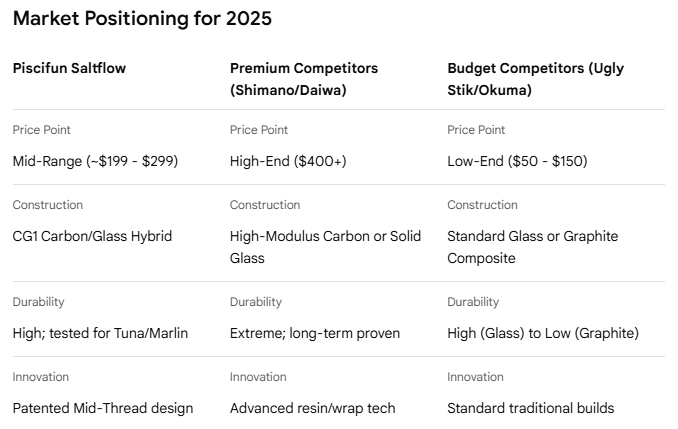
Saltwater fishing rods see some of the hardest use in the fishing world, especially offshore, where big fish, rough seas, and tough conditions are all in play. Piscifun, a brand known for affordable fishing gear, positions the Saltflow as a step up from their entry-level rods but not quite at the luxury tier.
The Saltflow line is designed for anglers wanting toughness, sensitivity, and corrosion resistance while keeping costs reasonable compared to brands like Shimano or Penn. When I first got my hands on the Saltflow, the main things I checked were build, balance, and feel.
I looked closely at how the rod holds up under stress, how the guides and reel seat are put together, and whether the finish matches up to the price. I also tried pairing it with Piscifun’s Kraken electric reel, which Piscifun recommends for a balanced combo during deep dropping and trolling sessions.
Setting this up was quick. The reel seats fit snug, and I noticed the overall feel was confidence-inspiring when locked into a fighting belt or boat holder. The guides are placed to distribute force evenly, which matters when targeting big bottom fish or running long braided lines for pelagics.
Main Features of the Piscifun Saltflow Rod
- CG1 Composite Blank: The Saltflow uses a proprietary blend of carbon fiber and fiberglass, which means it’s designed to be both strong and a bit forgiving, resisting twists and breaks when hooked up to a big tuna or grouper. This mix aims to give a fighting chance even during the most stubborn runs.
- Saltwater Ready Components: Sea Guide CNC aluminum reel seats and metal butts feel sturdy and are engineered to stand up to salt spray and constant use. These components don’t flex or corrode easily, making maintenance simpler and the ride out more reliable.
- Guide Inserts: Alconite guides are smoother than basic wire inserts and reduce line wear, which is super important when you’re running braid for deep-sea work. Less friction means your line lasts longer, even after repeated drops into deep water.
- Butt Options: Some Saltflow models come with both straight and bent butts, which gives you more control when fighting fish from a stand-up harness or locking the rod into a boat’s rod holder. Swapping is quick and helps you adapt to the type of fishing you’re doing each day.
- Handle and Grip: The handles have an eye-catching design and are finished well, though some users point out a lack of rubber or cork on the butt, which I’ll touch on more in the considerations below.
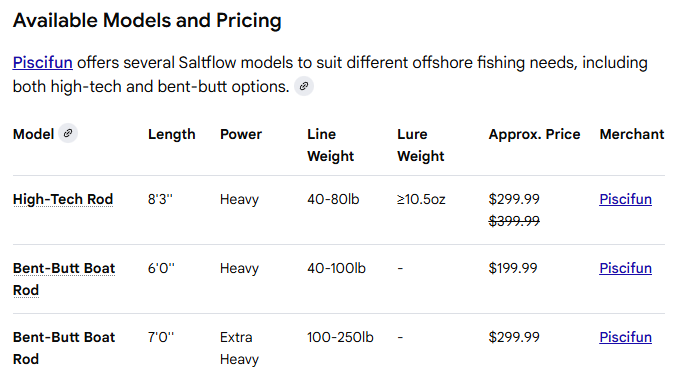
The rod comes in different power ratings (Heavy and XHeavy in most cases) and lengths, so it adapts nicely to heavy trolling, deep dropping, or chasing pelagics near rigs and wrecks. It’s built for versatility without trying to be an all-purpose tool, which is something advanced anglers tend to appreciate.
How It Handles: Strength, Sensitivity, and Versatility
The first thing I noticed when putting the Saltflow through its paces was the solid backbone, which is what you want for getting big fish off the bottom or handling repeated, hard pulls. The CG1 material holds up well under load but also leaves you picking up on the bite, thanks to a bit of flex in the tip section.
Sensitivity is always a challenge in heavy offshore rods, but this rod transmits lighter taps from tilefish or smaller snapper without feeling like a pool cue. On balance, the Saltflow feels pretty good, especially with heavier reels like electric models or big conventionals.
It’s not featherlight, but that’s typical for saltwater rods that put durability first. The real difference comes in rod torque; the MIDTHREAD internal structure helps cut down on rod twist under heavy line tension, making long fights less tiring. It’s easy to lock into a rod holder for deep dropping or use with a fighting harness for stand-up battles.
The interchangeable butt design is handy for switching between trolling and drop fishing, and makes packing the rod for travel more manageable. I found this feature especially useful for storing gear in smaller vehicles or cramped boat compartments.
What Makes the Piscifun Saltflow Stand Out, and Where It Falls Short
Like any gear, the Saltflow has parts I really like and others that leave room for improvement. Here’s how it shakes out based on my experience, as well as feedback I’ve read in online reviews and forum threads.
Where It Shines:
| Pros of the Piscifun Saltflow Rods |
|---|
| The feature list is impressive for the price. The Alconite guides, composite build, and strong reel seating hold up to what most offshore anglers need. Paired with the right reel, this setup can handle everything from average grouper to a shot at school-size tuna. The ability to swap between butt types means you can switch fishing styles without packing a second rod. |
| Versatility Factor: Having both straight and bent butt options without buying separate rods is a money saver. The rod can be adapted for many offshore setups, including trolling, stand-up battles, and deep vertical drops. If you’re sharing gear with buddies or changing up your tactics mid-day, this saves both space and cash. |
| Look and Feel: The Saltflow looks more expensive than it is, and the design touches are nice. The balance point feels right with bigger reels, and casting and working rigs isn’t a struggle. The finish has a next-level cool shimmer that stands up well over time. |
| Piscifun Saltflow Rods Concerns |
|---|
| Some anglers on forums argue that the blank, while good, doesn’t quite reach the high-performance level of premium brands found in the same price range. The main debate is whether the carbon/fiberglass blend justifies a $200 tag; some compare it to putting a flashy shell on affordable internals. For pure blank quality, other rods in this class can sometimes offer a stiffer, lighter feel. |
| Butt End Design: I read and agree with some users who were disappointed that there’s no nonslip rubber or cork on the very end of the handle. On rocky boats or fast-moving decks, this can matter for comfort and stability—and honestly, for this price, a touch more grip would be welcome. |
| Brand Perception: Piscifun’s track record is mostly about good value at lower price points. Some believe their true sweet spot is the sub $100 range (such as Carbon R1 models). The Saltflow is a step up, but long-term durability and parts availability are harder to judge next to legacy brands like St. Croix or Penn. This is something to think about if you’re planning to use your setup every week. |
User and Expert Opinions: Real World Impressions
I checked around user reviews, watched a few YouTube breakdowns, spoke with local captains, and ran the Saltflow on a recent trip chasing tilefish and snapper. One Florida angler shared how the Saltflow helped him land a 13lb blueline tilefish, and several offshore specialists mentioned landing tuna, marlin, and swordfish with power to spare.
Positive mentions focus on the weight, reliability, and the rod adapting well to electric reel setups. Some deep drop anglers like that the Saltflow fits easily into standard rod holders and combines nicely with heavy braided line. I also found that guides did not trap salt or develop corrosion after a week of daily use, which is a big plus offshore.
On the other hand, some users didn’t feel that Saltflow separated itself from other midrange rods. Complaints most often highlight a blank feel, concerns about long-term component rust if not cleaned, and wishing for slightly higher-end detailing at the price.
I also came across a report of a Piscifun reel breaking after heavy use, though the rod itself didn’t get called out for failure in that scenario. Replacement and repair can be a little slower compared to established American brands, though Piscifun generally supports their products well in practice.
Who Is the Piscifun Saltflow Rod a Good Fit For?
If you’re looking for an offshore rod with above-average features and design, but want to keep your setup under what major brands cost, the Saltflow will likely check a lot of boxes. It’s especially good for anglers who want versatility and appreciate having both butt styles without buying two rods.
If you’re just starting out in saltwater or want to upgrade from a basic setup, the Saltflow handles a broad range of offshore situations easily. The rod also appeals to those who value a little eye-catching style without sacrificing too much on performance.
Serious tournament anglers or anyone who’s super picky about blank quality and minor finishing details might be happier spending a bit more with established brands. The Saltflow works best if your priority is value with enough features for serious offshore work, rather than chasing the lightest or absolute most sensitive blank.
Frequently Asked Questions
How does the Piscifun Saltflow compare with rods from Shimano or Penn?
In my hands-on time, the Saltflow offers strong features and performance close to what you’d expect from similar midlevel rods, but some premium competitors feel slightly lighter and stiffer in use. If you put a lot of value on brand reputation or want lifetime parts support, classic names like Shimano or Penn may pull ahead. But for the price, Saltflow is surprisingly competitive, especially for weekend and casual offshore anglers looking for good value.
Does the Saltflow rod stand up to regular use in harsh saltwater?
From what I’ve seen and used, the corrosion resistance is solid with proper rinsing and care after each trip. The major risk comes if you neglect any rod. Over time, salt can wear down components, but the CNC aluminum and guide materials start out with good saltwater protection, especially compared to other rods in this price range.
Is the interchangeable butt system easy to use, and does it really help?
Yes, switching butts is as simple as unscrewing one and attaching the other. For me, the versatility is a genuine plus when switching from trolling to stand-up fights or packing for travel. The butt system holds firm and doesn’t loosen under load, making it a real asset for multi-technique anglers.
Can the Saltflow handle truly big offshore catches?
The heavier models (H and XH) can manage tuna, sailfish, and other big game if you match the rod to the right reel and line. Several users and YouTubers have put this drag to the test on marlin and swordfish, and while ultra-high-end rods do offer more, Saltflow gets the job done for most realistic offshore targets.
Final Thoughts on Piscifun Saltflow Rods
The Piscifun Saltflow rod stands as a stylish, robust offshore option that delivers good value for its price, even as it sparks some debate among fishing circles. I see it as a solid choice for anglers after dependable features and solid construction without reaching for the very highest shelf in the tackle shop.
Managing expectations—especially regarding blank “feel” and lasting quality—helps you get the most out of this rod. It’s a balanced pick for serious hobbyists, moderate crowds, or anyone needing a capable backup for offshore days.
For more insights and alternative rod picks, check out Piscifun’s own site or explore discussions on saltwater forums and YouTube reviews from well-known offshore anglers. If your priority is value and versatility with a touch of next-level cool, the Saltflow sits squarely in the sweet spot for practical offshore fishing.
Check Out Our Most Recent Articles:
- Best Surf Rods Under $150

- Targeting Tarpon In The Surf

- Secrets To Finding And Catching Snook

- 4 Tips for Targeting Striped Bass In The Surf
- Live Bait Vs Artificial Lures In The Surf

- The Reel Everyone Recommends Vs. The Reel That’s Built For Saltwater
As always, stay safe, enjoy the journey, and please try to leave it cleaner than you found it. If you have any comments, questions, ideas, or suggestions, please leave them in the comment section below, and I’ll get back to you ASAP. You can follow us on Facebook: Rex The Beach Angler, Instagram: thebeachangler7, Twitter: @AnglerBeach, and YouTube: Man Art Creations.
P.S. Thanks so much for checking out our blog; we really appreciate it. Just so you know, we may receive a commission if you click on some of the links that appear on our site. This helps us keep our content free and up-to-date for everyone. We appreciate your support!,






A life long surf fisherman with 50+ years of experience, I am also an avid hunter and outdoorsman. I will be sharing my passion for the outdoors with you so be prepared for hunting, fishing, camping, hiking and more. Along with gear reviews and the latest trends and innovations in the outdoor industry.