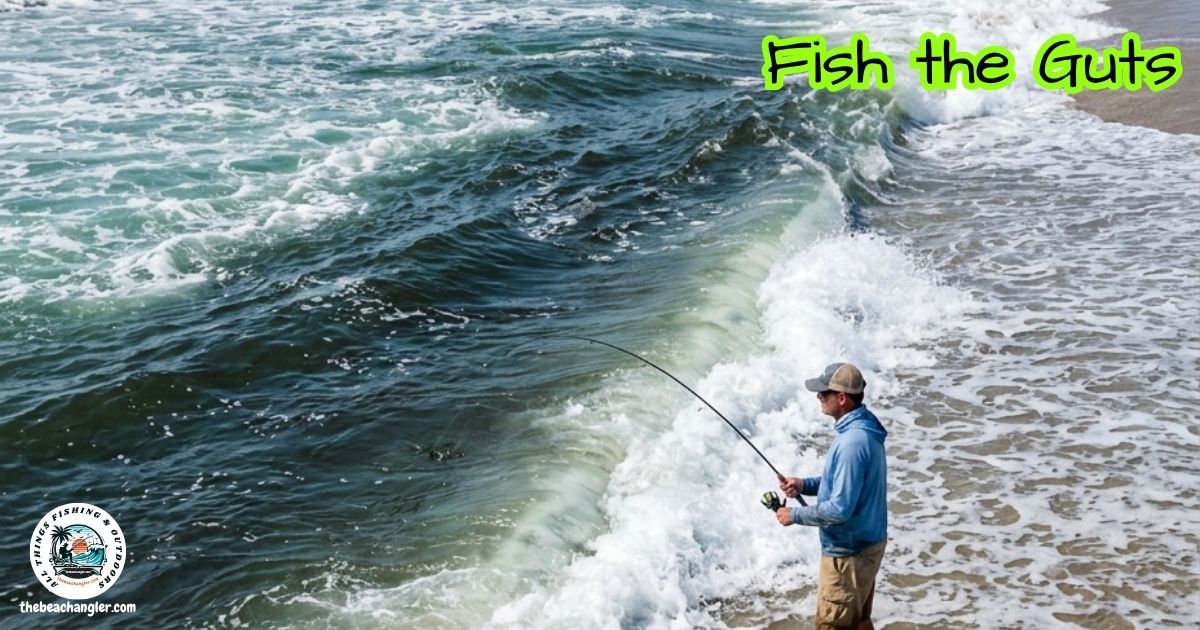
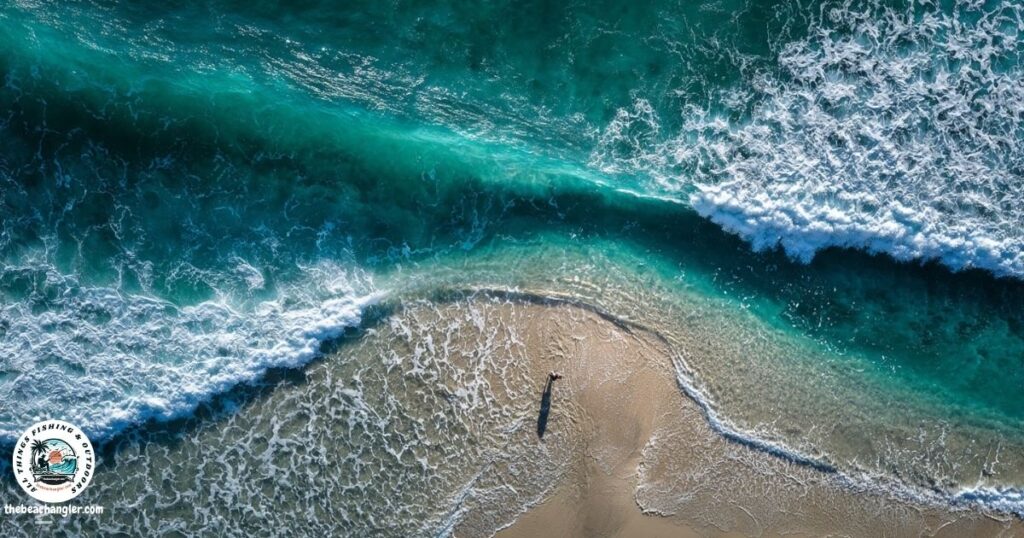
Surf fishing is full of surprises for anyone who pays close attention to the beach. I’ve learned that the “gut”, that trough of deeper, moving water just off the sand, offers a wide open invitation to fish, but it’s overlooked more often than you might think.
Understanding how to spot and fish the gut can easily turn an average day at the shore into a banner trip. Here, I’ll walk you through why the gut matters, how to spot it, and practical ways to fish it for better results every time.
Why the Gut Is So Productive in Surf Fishing
The gut plays a major role in the beach ecosystem, serving as a highway for baitfish, crabs, and other prey seeking an easy meal. When I fish the gut, I often notice that predator fish, such as redfish, pompano, black drum, and flounder, stick close to these deeper, slower spots.
That’s because the gut collects and funnels food naturally with every wave cycle, making it a feeding zone for bigger fish. While sandbars get plenty of attention, the water between them—the gut—offers hiding places from crashing waves and predators.
Both baitfish and predators use this area, but for anglers, it’s a chance to target species that are actively hunting, not just resting. The gut is rarely empty for long, especially around changing tides, and that’s why I always check it whenever I hit the surf.
How to Spot the Gut from the Beach
Learning to read the surf is one of the best skills I’ve picked up. After years of spending time on the sand, I look for a few telltale signs that a gut is present. Here’s what I look for every time:
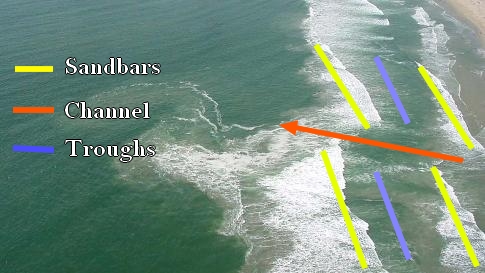
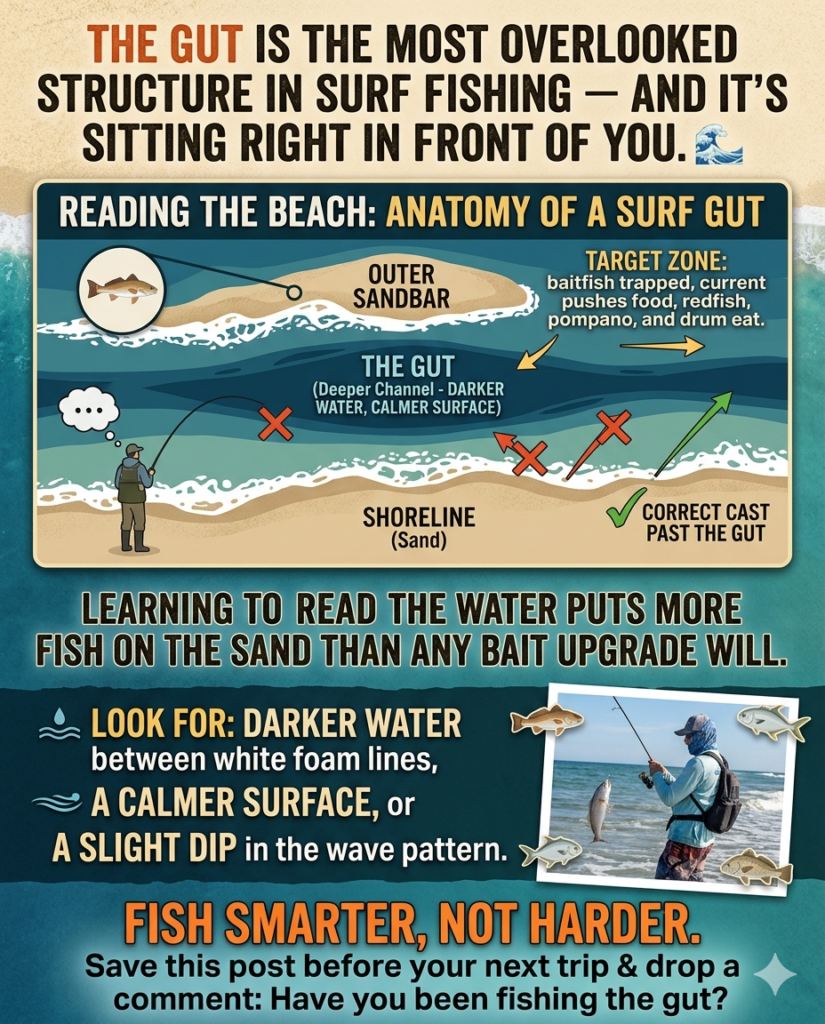
- Darker Water: I search for water that appears darker than the rest, which usually means it’s deeper. A gut often runs parallel to shore, nestled between two lighter, breaking lines of white foam that signal where the sandbars are.
- Calmer Surface: Unlike the foamy waves breaking on sandbars, the gut itself often appears as a relatively calm patch, even when the ocean is rough. This calm section is caused by deeper water, which absorbs wave energy before it crashes into the shallow spots.
- Dip or Trough in Wave Pattern: Sometimes the gut creates a little dip in the line of breaking waves. Step back and watch the surf, a break in the whitewater often lines up with a gut, while sandbars show up as rough patches where waves consistently break.
It’s super important to realize that the gut moves around with every tide shift, big storm, or seasonal change. I always walk the beach before picking a spot, scouting for these gut characteristics instead of just setting up next to the first parking lot.
Step-by-Step: How to Fish the Gut for Better Surf Results
Getting set up in the right place makes all the difference. Once I’ve found where the gut is, here’s my usual plan:
- Set Up Just Upcurrent of the Gut: I like to position myself just upcurrent so the current delivers my bait naturally into the gut.
- Target Edges and Dropoffs: Fish often prowl the sides of the gut, where shallow water suddenly drops away. I aim my casts just beyond the drop or right along these edges for the best shot at actively feeding fish.
- Let the Current Move the Bait: Rather than anchoring my bait with a heavy sinker, I often opt for just enough weight to allow the current to drift my bait through the gut. This looks like real prey and draws more strikes from hungry fish, especially in active surf conditions.
- Stay Mobile with the Tides: As the tide rises or falls, fish change their routes. I keep scanning and moving, adjusting my setup to stay on the fish as the depth and current shift.
Matching your tackle to the beach makes a big difference. Light to medium surf rods paired with a pyramid or Sputnik sinker can keep bait in the strike zone long enough for fish to spot it. Fresh bait shrimp, cut mullet, or sand fleas work best in the gut, since that’s what fish are zeroing in on as it gets washed by naturally. Combining sharp hooks with the right bait boosts your odds of hooking the species you’re after.
Things I Pay Attention to Before Setting Up
Even though the gut is a hotspot, fishing it well means paying attention to a few details before making my first cast. Here are the key things I always check:
- Current Direction: Figuring out how the water is moving gives me clues about where bait and fish are drifting. I stick my feet in the water or toss in a float to see which way my bait will go before I make my cast.
- Tide Stage: Both incoming and outgoing tides can be productive, but the gut usually gets busiest around high tide, or just after, when the water pulls back and concentrates bait in the channel.
- Beach Contour: Some beaches feature dramatic sandbars and channels, while others are much flatter. I walk a stretch until I spot the deepest, darkest water near the shore. The longer the gut, the more fish it tends to hold, especially on weekends when the beach gets crowded.
- Season and Water Clarity: Warmer weather brings in migratory species like pompano and Spanish mackerel. While cloudy or stirred-up water can make fishing trickier, a moving tide flowing through the gut often revives the bite.
Taking these conditions into account helps me avoid empty stretches and make sure I set up where the fish are likely to be feeding.
Common Problems and How I Work Around Them
No surf trip goes perfectly every time, but with a little flexibility, I work around common obstacles that can mess up gut fishing:
- Too Much Seaweed: When drifting seaweed clogs up the gut, I walk down the beach until I find a cleaner stretch. Raising my rod tip or using a higher sand spike sometimes keeps my line above the worst of it.
- Heavy Beach Traffic: Lots of swimmers and anglers can push fish away from the shoreline. Early mornings or weekdays are usually quieter, giving me a better shot at an undisturbed gut.
- Moving Gut: Storms and changing sand conditions can move the gut overnight. I keep notes and mental maps of productive spots but always double-check my favorite beaches each visit, so I’m not left guessing.
Extra Tips for Fishing the Gut Like a Local
I’ve learned a few tricks from frequent surf sessions that help step up gut fishing results:
- Stay Mobile: If I’m not catching, I don’t hesitate to walk a few yards to a new area. Following the signs of a healthy gut can put me right on feeding fish; even a small move can pay off big time.
- Double Up: Using two rods, one closer in and one past the gut, increases my odds of getting into the fish zone.
- Fresh Bait Rules: Bringing live or super-fresh bait, like sand fleas or mullet caught on site, usually draws more bites. The difference in scent and appearance stands out to fish, especially where current is moving through the gut.
- Pay Attention to Wildlife: Birds diving or dolphins in the area often signal bait schools nearby, meaning predators could be actively working the gut. Watching for nonhuman activity sometimes points the way to great fishing.
Real-World Example: When Fishing the Gut Changed My Day
I still remember a late spring morning when I was the first person on the sand. I walked the first quarter mile and noticed a long, dark, slow-moving gut caused by an unusual east wind the night before. The first few casts with fresh shrimp came up empty, but when I adjusted to cast along the gut’s outside edge, the action changed instantly. Over the next hour, I landed two slot redfish and released a hefty black drum.
If I’d just picked my spot randomly, I would have ended up in shallow water—and likely caught nothing more exciting than a few catfish. That morning convinced me to never skip out on scouting the gut and checking water features every single trip.
Frequently Asked Questions About Fishing the Gut
How can I spot the gut if I’ve never done it before?
Watch for darker water running parallel to the shore, marked by calmer spaces between white, breaking waves. Get there early, walk a few hundred yards, and look for repeating patterns in the wave breaks.
Can I fish the gut at any tide?
Most tides can be productive in the gut, but I catch the most fish on a rising tide, a couple of hours before high tide, or just after high tide. Predators push in to hunt bait concentrated by the moving water.
What bait works best for fishing the gut?
I like live or recently dead shrimp, freshly caught sand fleas, and cut mullet. Matching your bait with what’s in the surf zone boosts chances of hooking the fish that are actively hunting the gut channel.
Should I anchor my bait in the gut or let it drift?
Letting bait drift naturally with only enough weight to keep it low is often the best approach, since the current moves food in a way that looks real to fish. The main goal is to mimic the movement of prey.
Final Thoughts on Fishing the Guts
Fishing the gut is one of the easiest but most powerful surf fishing strategies out there. Each time I spend extra moments studying the water and setting up on the right channel, I see better results. The gut always changes, so keep things fresh and stay curious. Give it a try and see how your shore fishing results go up next time you’re by the ocean.
Check Out Our Most Recent Articles:
- Best Surf Rods Under $150
- Targeting Tarpon In The Surf
- Secrets To Finding And Catching Snook
- 4 Tips for Targeting Striped Bass In The Surf
- Live Bait Vs Artificial Lures In The Surf
- The Reel Everyone Recommends Vs. The Reel That’s Built For Saltwater
As always, stay safe, enjoy the journey, and please try to leave it cleaner than you found it. If you have any comments, questions, ideas, or suggestions, please leave them in the comment section below, and I’ll get back to you ASAP. You can follow us on Facebook: Rex The Beach Angler, Instagram: thebeachangler7, Twitter: @AnglerBeach, and YouTube: Man Art Creations.
P.S. Thanks so much for checking out our blog; we really appreciate it. Just so you know, we may receive a commission if you click on some of the links that appear on our site. This helps us keep our content free and up-to-date for everyone. We appreciate your support!





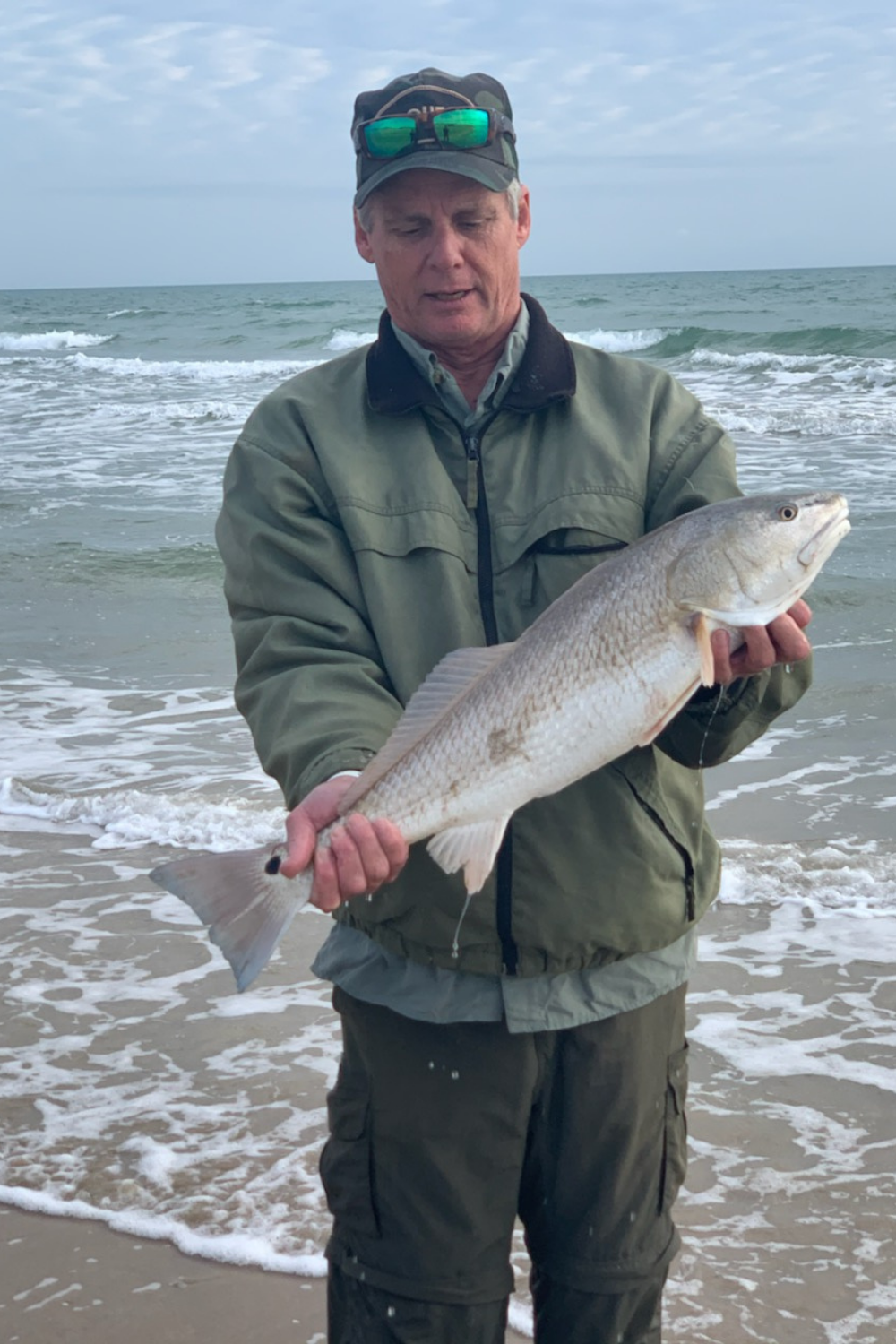
A life long surf fisherman with 50+ years of experience, I am also an avid hunter and outdoorsman. I will be sharing my passion for the outdoors with you so be prepared for hunting, fishing, camping, hiking and more. Along with gear reviews and the latest trends and innovations in the outdoor industry.