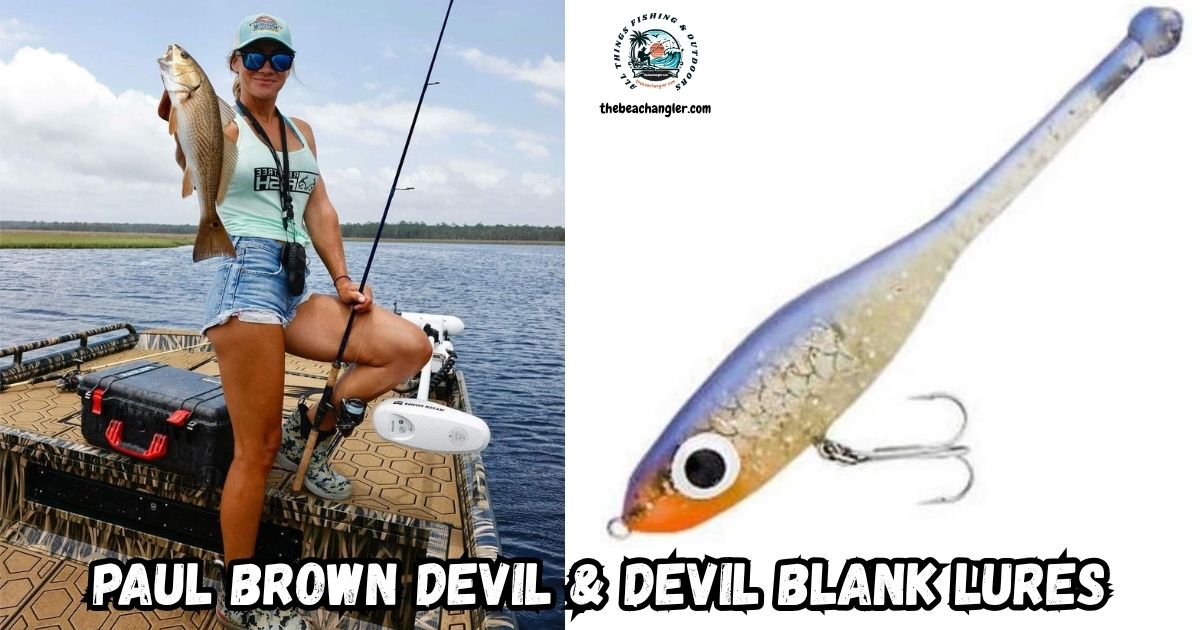
If you enjoy experimenting with different lures or want to level up your saltwater fishing, the Paul Brown Devil and Devil Blanks might grab your attention. These lures are known for their signature soft body, strong gliding action, and the freedom to customize. Based on my own time using them in bays and coastal waters, I’ve found their performance stands out, especially for targeting fish like speckled trout and redfish.
QUICK LOOK: Features and Tips for Fishing the Paul Brown Devil Lures
- Soft-bodied construction: Gives the lure a more natural look and feel in the water.
- Rat tail design: Adds a unique shuffling movement on even mild twitches.
- Customizable Blank versions: Paint your own or mix in different rattles or hooks.
- Single treble hook: Helps with smooth, reliable hooksets.
- Integrated rattle: Adds a bit of noise to attract fish from a distance.
How to Fish the Paul Brown Devil Lures:
- Let the lure sink: On your cast, allow a few seconds for it to reach the desired depth before beginning your retrieve.
- Use microtwitches: Work the rod with small jerks, not big sweeps. This brings out the signature side-to-side waggle.
- Pause to mimic wounded bait: Letting the lure sit can make it look injured, which gets fish curious or aggressive.
- Experiment with your cadence: Slow things down if you’re not getting hits, or speed up if fish are aggressive.
What Makes the Paul Brown Devil and Devil Blanks Unique?
The first thing I noticed about the Paul Brown Devil is its flexible, soft-bodied build. This design helps it mimic wounded baitfish, making it super effective at getting strikes. The Devil’s long, thin “rat tail” creates a lifelike motion when I give the rod a soft twitch. Those subtle movements often make all the difference when fish are being picky or the bite slows down.
Features that I find helpful include a built-in wire harness for durability, a single sturdy treble hook, and a special vacuumed rattle. That rattle adds sound, which can draw fish in, especially in cloudy water. If you enjoy customizing your lures, Devil Blanks come unpainted, letting anyone paint or dye them in custom colors and tweak hardware as needed. That flexibility appeals to anglers who like a hands-on approach or want to match their lure perfectly to local baitfish.
- Soft-bodied construction: Gives the lure a more natural look and feel in the water.
- Rat tail design: Adds a unique shuffling movement on even mild twitches.
- Customizable Blank versions: Paint your own or mix in different rattles or hooks.
- Single treble hook: Helps with smooth, reliable hooksets.
- Integrated rattle: Adds a bit of noise to attract fish from a distance.
One thing that sets the Devil apart is how it responds to the lightest movements. Even with just a slight tap, the soft plastic and elongated tail come to life, producing a shuffling motion that imitates a struggling baitfish. For anglers looking for subtle tackles that still make a big impact, this feature shines.
Whether you are a seasoned fisherman or picking up lure customization as a new hobby, the blend of realism and creativity offered by the Devil and Devil Blanks can meet your needs on nearly any inshore fishing trip.
How to Fish the Paul Brown Devil and Devil Blanks
Once I first tied on a Paul Brown Devil, I noticed the lure worked best with simple actions. The standard method is a twitch-and-pause retrieve. After I make a cast and let the lure sink for a moment, I give the rod tip a series of short, gentle snaps.
This makes the soft tail dart and wobble, giving off the look of an injured baitfish. Sometimes, I’ll stop the motion and let the lure sit or sink; this pause often triggers the most strikes, since it imitates a wounded fish struggling near the bottom.
I mix up retrieve speeds and pause lengths based on the water conditions or target species. A slower, low-to-the-bottom retrieve can help in colder water or when fishing for less-active fish. I always keep the rod tip low and steady to maintain contact and notice even smaller bites. If you’re not sure you’re working it right, just remember: less is often more. Using too much force or moving the rod too fast can kill the lure’s subtle action.
- Let the lure sink: On your cast, allow a few seconds for it to reach the desired depth before beginning your retrieve.
- Use microtwitches: Work the rod with small jerks, not big sweeps. This brings out the signature side-to-side waggle.
- Pause to mimic wounded bait: Letting the lure sit can make it look injured, which gets fish curious or aggressive.
- Experiment with your cadence: Slow things down if you’re not getting hits, or speed up if fish are aggressive.
A tip I’ve learned is to let the lure fall to the bottom sometimes, then use slow lifts and pauses to attract fish hugging the structure. In shallow water, you can control depth by starting the retrieve as soon as the lure lands. The key is to adjust your approach until you find what gets the fish excited on that particular day.
Adjusting Your Setup for the Best Results
Getting the most out of the Devil and the Blanks depends a lot on your gear and rigging. I like using a medium-light spinning rod with a sensitive tip to feel what’s going on underwater. Pairing this with a 10 to 15-pound braided main line and a fluorocarbon leader gives enough strength for inshore fish, while still letting the lure move naturally.
The Blank’s version comes into its own if you enjoy tweaking your hardware. I’ve experimented with different styles of hooks and even added my custom rattles. This can help you fish deeper or shallower, or just dial in the action that works best for your local fish.
- Rod choice: Light to medium-light rods improve control and sensitivity.
- Line: Thinner diameter lines give better lure feel and help maximize action.
- Customizing: Single or double split rings, custom paints, and different rattle options help adapt to changing conditions.
How Color and Water Conditions Affect Performance
Color makes a real impact. In murky water, I stick with darker options or bold custom paint jobs so fish notice the profile and movement. Clear water calls for more natural or even translucent shades. On bright days, reflective finishes can attract attention from farther away. The flexibility of the Devil Blanks shines here, since I can match any hatch or weather change by simply painting up a new lure.
Don’t hesitate to test out new colors; sometimes something unexpected gets the most bites. Changing up the retrieve, depth, or color can often break a slow fishing streak. Keeping track of successful color combinations in different environments can help you predict what will work on future outings. Asking local anglers about their favorites might reveal a secret color pattern or two as well.
Pros and Cons: My RealWorld Experience
After plenty of casts with both the Devil and the Blanks, I’ve had days where these lures saved my trip. On pressured waters where fish have seen every hard bait on the market, that subtle softtail wag seems to catch their interest.
The soft plastic feels more lifelike, and the action during the pause sets it apart from typical lures. I appreciate that the single treble hook makes for easy unhooking, especially when practicing catch and release. If you want a lure that excels on slow days, this is one to keep handy.
On the downside, the soft body can get torn up by toothy or aggressive fish. While I’ve had some lures last for years, a hot bite with bluefish or mackerel can chew one up quickly. Devil Blanks are priced lower than the fully rigged Devil, but investing in a few at a time can add up if you fish often. You might want to carry a spare or two, especially on trips targeting bigger predators.
- Natural action: Subtle movement triggers strikes from pressured fish.
- Custom options: The Blank lets you make the lure your own, which is great for serious anglers.
- Soft plastic durability: Does not always hold up to lots of big fish or toothy species.
- Price: Both models cost more than some hard-bodied lures, but the performance can be worth it.
Tips for Customizing Devil Blanks
Customizing lures has always been fun for me. If you pick up some Devil Blanks, you can use airbrush paint or permanent markers for color, add glitter or reflective tape, or even swap out hooks for your preference. Some anglers bend the nose or tail slightly for a tweaked wobble. Playing around like this is a good way to find new presentations and get more from each lure.
For storage, I always keep custom-painted Blanks in a dry container and give them a rinse after saltwater trips. If you carry them in your box with other lures, check once in a while for dents or tears in the plastic, since soft plastics can stick together. Keeping a few blank lures in reserve means you can try out fresh color ideas whenever the mood strikes or if fish behavior suddenly changes on you.
If you’re just starting with lure customization, there are plenty of tutorials online and some communities where you can ask about paint techniques, finishes, and hardware swaps. Sometimes, seeing what others have cooked up will inspire new approaches for your tackle box. You don’t need expensive supplies to get creative—a few permanent markers and a bit of imagination can give your lures that unique look fish haven’t seen before.
Frequently Asked Questions
Are Paul Brown Devil lures only for saltwater fishing?
While most anglers use them in saltwater, these lures work in freshwater for bass or other predatory fish. The soft tail action attracts a variety of species.
What hook size is best for Devil Blanks?
I usually go with the original treble size they ship with, but you can use a slightly larger or smaller treble based on your target fish and local rules.
Can I use scent on these lures?
Yes, soft plastics like these take scent well. Adding a bit of fish attractant can give you an edge, especially when fish are cautious.
How do I repair a torn Devil lure?
Sometimes soft glue or a lighter touch with a heat gun can patch small tears. For big rips, I usually retire the lure or save it for parts.
Why I Recommend Trying Paul Brown Devil and Devil Blanks
Fishing with these lures has made a real difference in my results when standard hard baits aren’t working. The gliding, suspended action and soft touch get strikes from fish that ignore crankbaits or spoons. Tapping into the Devil Blank’s customization, I can match whatever conditions I face, which helps make each trip a bit more productive.
They’ve become a regular part of my tackle box, and I keep a few in rotation year-round for tough bites or just when I want to test a new color idea. If you’re into lure fishing and enjoy a bit of DIY, I think you’ll have a lot of fun dialing in the Paul Brown Devil Blanks.
Their unique action and customizable design might be just what you need for your next big catch. Wrapping up, these lures put some real fun and performance into every fishing adventure—and you get to put your own spin on things with the Blanks.
Check Out Our Most Recent Articles:
- Best Surf Rods Under $150

- Targeting Tarpon In The Surf

- Secrets To Finding And Catching Snook

- 4 Tips for Targeting Striped Bass In The Surf

- Live Bait Vs Artificial Lures In The Surf

- The Reel Everyone Recommends Vs. The Reel That’s Built For Saltwater

As always, stay safe, enjoy the journey, and please try to leave it cleaner than you found it. If you have any comments, questions, ideas, or suggestions, please leave them in the comment section below, and I’ll get back to you ASAP. You can follow us on Facebook: Rex The Beach Angler, Instagram: thebeachangler7, Twitter: @AnglerBeach, and YouTube: Man Art Creations.
P.S. Thanks so much for checking out our blog; we really appreciate it. Just so you know, we may receive a commission if you click on some of the links that appear on our site. This helps us keep our content free and up-to-date for everyone. We appreciate your support!





A life long surf fisherman with 50+ years of experience, I am also an avid hunter and outdoorsman. I will be sharing my passion for the outdoors with you so be prepared for hunting, fishing, camping, hiking and more. Along with gear reviews and the latest trends and innovations in the outdoor industry.