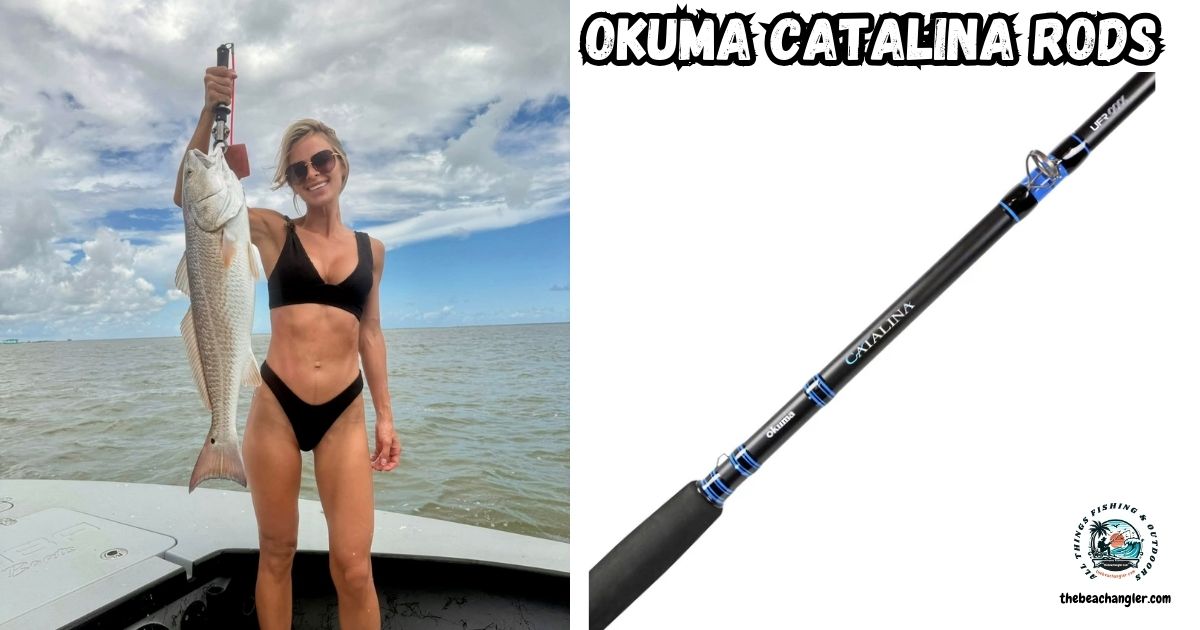
The Okuma Catalina Inshore series is aimed at anglers who want reliable gear when targeting inshore saltwater species. I’ve used plenty of rods for coastal fishing and know how important sturdy construction and comfort are, especially when fighting powerful fish like redfish or yellowtail.
QUICK LOOK: Key Features to Consider with the Okuma Catalina Rods
- Durability: Designed for hard use, these rods last a long time with minimal maintenance thanks to the carbon blank and reinforced tip.
- Value for Money: I like that you get a lot of premium components in the middle price range; things like Fuji reel seats and braided line ready guides, without paying a fortune.
- Versatility: Works for a wide mix of inshore targets and fishing styles, plus some light offshore use when needed.
- Comfort: The grips, balance, and moderate weight make a real difference during long trips on the water.
- Warranty: One year of warranty support through Okuma, which is good but not as extended as some premium brands provide.
- Sensitivity: A few people mention wanting greater bite-sensing ability, especially when targeting finicky species with light baits.
- Weight: The rods are light for their power, but do feel thicker or slightly heavier near the handle when compared to some ultralight models.
- Aesthetics: The design is practical and clean, but doesn’t grab as much attention on the rack compared to some eye-catching rods.
If you’re after gear that holds up to rough treatment on boats, piers, or beaches, the Catalina Inshore line stands out as a serious option. Here, I’ll break down what makes these rods worth considering, what you should look for before buying, how they compare to competing rods, and some key tips to get the best use out of them.
Features of Okuma Catalina Inshore Rods
Okuma designed the Catalina Inshore rods to give anglers both strength and sensitivity without adding a lot of weight. The 24-ton carbon blank construction keeps the rod light enough for a full day of casting but tough enough to handle strong runs and sudden bursts from saltwater fish.
I find this balance makes a real difference on the water. When I’m working heavier lures or live bait along jetties or shallow grass flats, the rod responds quickly and recovers smoothly after a hard hookset. The UFR (Ultimate Flex Reinforced) rod tip technology is another highlight for me.
Okuma weaves unidirectional fibers into the tip, boosting its lifting power by up to four times compared to standard tips. I’ve noticed this design lets me put more pressure on a fish without worrying about the rod snapping, even when I find myself in awkward positions on the rail or near rocky shoreline.
This safeguard is really important if you often find yourself testing the limits of your gear. The guides on Catalina Inshore models are also built for reliability. You’ll find doublefoot welded stainless steel frames and, on some models, SeaGuide components with Zirconium inserts.
I recommend these if you plan on fishing with braided lines, since they cut down on friction and are less likely to groove over time. The reel seat varies based on the rod’s purpose: standard models use Fuji DPS graphite seats, which are light and corrosion-resistant, while the heavy-duty rail models use solid aluminum seats with double locking nuts for extra security.
Grips are finished with dense EVA foam, and some rail models swap in a textured shrink tube for a firmer hold in wet conditions. A machined aluminum gimbal on certain versions adds even more control when fighting big fish from a boat’s edge.
Having these quality touches makes long sessions easier on your hands and helps keep my grip secure when I’m tired or the deck gets slippery. In addition, the clean design aesthetic focuses on function, which many experienced anglers appreciate because it doesn’t distract from what matters most: performance on the water.
Best Use Cases and Applications
The Catalina series mainly targets anglers going after big saltwater species, but certain inshore models are tuned specifically for the unique demands of coastal fishing. I use them for everything from working jigs for yellowtail to casting live shrimp at snook in the mangroves.
The rods are also built to handle tough bycatch like black drum or small sharks, making them versatile across a lot of inshore environments. On days when conditions change rapidly, these rods make quick work of switching lures or adjusting your approach based on tide or current.
If you need a rod that’s equally at home fishing piers, jetty rocks, bridges, or drifting flats, this series covers those bases. The lighter tip sections give you good bite detection for cautious or tricky fish, and there’s plenty of backbone further down the blank when you need to pull a catch away from cover or structure quickly.
This combination lets you adapt to multiple fishing styles and tactics within one outing, saving room in your tackle bag. Catalina Inshore rods are also a solid fit for nearshore trips when the weather allows access to reefs and wrecks in shallower waters.
I find the combo of weight, reach, and durability suits anglers who like to switch techniques and species without having to swap out rods all day long. Whether chasing schooling reds at sunrise or bottom bouncing for snapper later, the Catalina Inshore has you covered.
What to Consider Before Buying an Okuma Catalina Inshore Rod
While the Catalina Inshore rods tick a lot of boxes for saltwater anglers, it pays to think through your specific needs before making a choice. Here are some things I always weigh before buying a new rod:
- Length and Action: Longer rods offer more casting distance but can be harder to work in tight spaces, such as under docks. Fast action tips are better for sensitivity and quick hooksets, while moderate actions help absorb shock during prolonged fights.
- Line and Lure Ratings: Make sure the rod can handle the weight of lures and the thickness of line you plan to use most often. Heavier ratings are necessary if you expect regular battles with large or powerful fish.
- Guide and Reel Seat Material: I prefer rods with guides designed for braided lines, which last longer when exposed to salt and heavy drag. Reel seats should lock firmly and resist corrosion, especially if you fish surf or brackish water.
- Grip Comfort: If you spend hours casting and reeling, comfortable grips matter a lot. Test the rod in person if you can, or check for details like EVA foam and gimbal support. A good grip will save your hands on marathon sessions.
- Warranty and Service: The one-year limited warranty offered through Okuma can add some peace of mind, but check the paperwork and keep your proof of purchase just in case. It’s always wise to know what the brand will cover should something go wrong.
Durability in Saltwater Settings
In my experience, how a rod holds up to corrosion and rough handling matters more than almost anything else in saltwater fishing. Even after months of regular exposure to spray and the occasional drop or bump, my Catalina Inshore rod still looks and performs just about the same as when I bought it.
Rinsing rods after use and checking for guide wear keeps them reliable longer. The simple act of caring for your gear can add seasons to its lifespan, especially in the harsh saltwater environment.
Sensitivity and Bite Detection
While these rods are sensitive, some anglers do find them a little less crisp compared to ultrahigh-end alternatives built specifically for finesse fishing. If the main priority is feeling the faintest bites from small fish, you may want to try several options side by side. Otherwise, most users, myself included, find the sensitivity more than good enough for common inshore techniques. Their overall performance makes up for small tradeoffs in feel.
Pros and Cons of Okuma Catalina Inshore Rods
- Durability: Designed for hard use, these rods last a long time with minimal maintenance thanks to the carbon blank and reinforced tip.
- Value for Money: I like that you get a lot of premium components in the middle price range; things like Fuji reel seats and braided line ready guides, without paying a fortune.
- Versatility: Works for a wide mix of inshore targets and fishing styles, plus some light offshore use when needed.
- Comfort: The grips, balance, and moderate weight make a real difference during long trips on the water.
- Warranty: One year of warranty support through Okuma, which is good but not as extended as some premium brands provide.
- Sensitivity: A few people mention wanting greater bite-sensing ability, especially when targeting finicky species with light baits.
- Weight: The rods are light for their power, but do feel thicker or slightly heavier near the handle when compared to some ultralight models.
- Aesthetics: The design is practical and clean, but doesn’t grab as much attention on the rack compared to some eye-catching rods.
Okuma Catalina Inshore Rods vs. the Competition
The midtier inshore rod market is stacked with strong contenders, but the Catalina Inshore series holds its own because of its build quality and price. I’ve compared them to a few of the most common alternatives to help you see where they fit in:
- St. Croix Triumph Inshore: The St. Croix rods offer great sensitivity and reputation, but the Catalina stands out for those who want a little more durability and UFR tip strength. For pure finesse use, Triumph might have a slight edge.
- Shimano Teramar: Teramar rods are popular for their smooth handling and responsive blanks. While Teramars might feel lighter in hand, Catalina Inshore rods generally deliver more lifting power and are built stiffer for heavier work.
- Penn Battalion Inshore: Penn’s Battalion models are known for solid performance and old-school reliability. I see a lot of similarity here with the Catalina, with both leaning into practical, day-to-day use and strong components, especially for braided line.
- Other Okuma Rod Series: Okuma’s own Recon and PCH Custom rods focus more on niche tactics or are specialty builds. Catalina is the more “universal” option for inshore fishing, handling a wider variety of situations in salt or even fresh water.
When weighing your options, it helps to think about what fits your fishing style and local waters best. Every rod has strengths, but what puts the Catalina Inshore in a good spot is its practicality, lasting build, and fair price. These qualities make it a safe buy as both a primary rod or backup in your lineup.
Tips for Getting the Most from Your Okuma Catalina Inshore Rod
To really enjoy these rods and make them last, I like to:
- Rinse off salt, sand, and bait residue after every trip. A gentle spray with fresh water helps prevent corrosion on guides and reel seats.
- Store rods indoors or in rod sleeves when not in use to avoid sun and heat damage. This simple habit greatly increases lifespan.
- Check guides and grips for wear before every outing, especially if you use heavy braided line or fish near rocks.
- Pair the rod with a reel sized for your target species. Too light or too heavy throws off the balance and makes all-day fishing less comfortable.
- Use the warranty if you spot defects early. Okuma customer service is responsive if you have paperwork and clear photos.
Routine maintenance, paired with basic care and the right gear pairing, keeps your rod in great shape for years. Even the most rugged rod benefits from an occasional once-over and quick cleaning, especially after long days in rough salt conditions.
Frequently Asked Questions
What kind of fish can I target with a Catalina Inshore rod?
I use mine for redfish, snook, sea trout, yellowtail, and even schoolie stripers. The backbone lets you tangle with bigger bycatch or handle fish near cover.
How do I pick the right model from the Catalina Inshore series?
Think about what you fish for most. Pick lighter models for finesse work or smaller baits, heavier ones for live bait, jigs, or bigger fish near structure.
Can these rods be used for light offshore fishing?
Yes, within reason. I’ve run some models on shallow reefs and for snapper with good success, just stay mindful of their rated limits.
What’s the best way to care for a rod after saltwater use?
Rinse with clean water soon after use, let it dry completely, and occasionally check for corrosion or damage. This keeps both the blank and hardware reliable long term.
Final Thoughts on Choosing Okuma Catalina Inshore Rods
Durability, fair pricing, and a smart mix of features make the Catalina Inshore models a popular pick among coastal anglers. I find them especially useful for anglers looking for a workhorse rod that can take some knocks without breaking the bank or compromising comfort.
If you want a good balance between price, performance, and reliability, these rods are really worth a serious look in today’s saltwater tackle market. Whether you’re a weekend enthusiast or on the water every week, the Catalina Inshore series won’t let you down.
Check Out Our Most Recent Articles:
- Seviin GW Series Spinning Reels
- New Mirrolure Chameleon Series Lures
- Field-testing The Quantum Benchmark Spinning Reel
- Z-man Swag Lt Swimbait
- Kastking Kapstan Se Saltwater Spinning Reel
- The Daiwa Crosscast Surf Reel
As always, stay safe, enjoy the journey, and please try to leave it cleaner than you found it. If you have any comments, questions, ideas, or suggestions, please leave them in the comment section below, and I’ll get back to you ASAP. You can follow us on Facebook: Rex The Beach Angler, Instagram: thebeachangler7, Twitter: @AnglerBeach, and YouTube: Man Art Creations.
P.S. Thanks so much for checking out our blog; we really appreciate it. Just so you know, we may receive a commission if you click on some of the links that appear on our site. This helps us keep our content free and up-to-date for everyone. We appreciate your support!





A life long surf fisherman with 50+ years of experience, I am also an avid hunter and outdoorsman. I will be sharing my passion for the outdoors with you so be prepared for hunting, fishing, camping, hiking and more. Along with gear reviews and the latest trends and innovations in the outdoor industry.