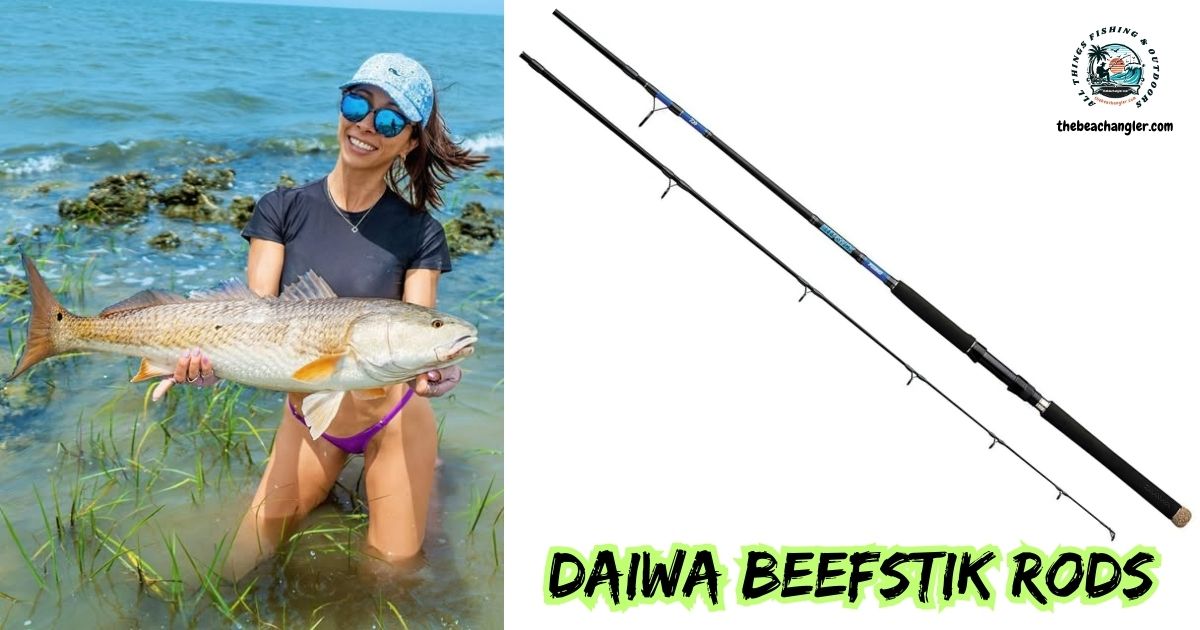
Daiwa Beefstik Surf Rods are a classic choice for anglers who want tough equipment that doesn’t cost a fortune. I’ll walk you through what makes these rods a great pick for surf fishing, especially if you prefer reliability and strength over ultralightweight modern designs.
QUICK LOOK: Important Considerations when Choosing the Daiwa Beefstik
- Weight: The fiberglass blank is heavier than modern alternatives. Carrying the rod around or casting repeatedly can get a bit tiring, especially on longer trips.
- Guide Longevity: While the ceramic guides hold up well at first, some anglers have mentioned the inserts may pop out, or the metal can start to corrode after lots of use in harsh saltwater conditions. Rinsing rods after each trip keeps them in better shape. Periodically checking the guides and touching them up with a drop of freshwater helps keep corrosion at bay.
- Rod Power: The Beefstik comes in heavy power ratings, supporting line classes from 15 up to 100 pounds in some models. This is perfect for serious surf targets, but overkill for panfish or other small species.
- Sensitivity: Subtle hits can be harder to detect. For me, this isn’t a problem with larger surf fish, but if you love to feel every tap, another rod style could suit you better.
Surf fishing can be challenging, but with the right gear, it becomes a lot more enjoyable and successful. When I started, finding a rod that could handle big fish and rough conditions without breaking the bank was a priority. I own several of these rods and, for the money, they are a great option for surf fishing.
What Makes Daiwa Beefstik Surf Rods Special?
Daiwa Beefstik Surf Rods have a reputation for being almost indestructible. These rods use solid fiberglass construction, which is something I learned to appreciate when dealing with strong surf or big fish. While many newer rods use graphite to save weight, the Beefstik sticks with fiberglass for its toughness and flexibility.
Fiberglass rods like these can take a beating. I’ve dropped them on rocks and yanked on big fish, and they keep going strong. It feels good knowing my gear won’t let me down during a rough day at the beach. For anyone fishing from the sand, durability comes in handy, not just for fighting fish, but also when moving gear around or dealing with unpredictable waves.
Additionally, fiberglass provides a forgiving feel and extra resistance to sudden shocks or jolts that happen during a wild fish run or when a wave hits your rod unexpectedly. That little bit of softness acts as insurance against accidental breakage that lighter rods can’t always offer.
Key Features and Benefits
The Beefstik lineup stands out, especially at its price point. So, here’s a breakdown of the cool features I think you’ll really like:
- Solid Fiberglass Blank: Built with a one-piece fiberglass blank, these rods take on extra weight and heavy loads without breaking. This is great for casting big baits or battling large species like red drum, sharks, and stripers.
- Integrated Fiberglass Tip: The tip is fully connected to the blank, so it doesn’t snap during forceful casts. This adds more strength where rods tend to be weakest, right at the end.
- Heavy Framed Ceramic Guides: Daiwa uses ceramic guide inserts on these rods. These guides are tough enough to handle both monofilament and braided lines, and the frames are built to last through seasons of saltwater spray.
- EVA Foam Grips: The hard EVA grips stay comfortable and nonslip, even when wet. I always look for rods that won’t slip out of my hand when I’m reeling in a heavy fish, especially with slimy bait or surf spray around.
- Stainless Steel Reel Seat: The composite reel seat with stainless steel hoods keeps your reel tight and resists corrosion. Saltwater can be rough on equipment, so sturdy metal components at the base really matter.
Daiwa keeps the design simple with these rods. As someone who prefers practical gear over flashy looks, I appreciate this straightforward approach. Plus, the simplicity of design means there are fewer moving parts that can go wrong—creating fewer worries for long days on the beach. The overall balance makes the rod manageable despite its rugged build, and the minimalist aesthetics mean all the focus falls on performance.
Durability vs. Sensitivity: What to Expect
If you’re new to surf rods, it’s worth knowing the pros and cons of fiberglass compared to graphite models. Fiberglass is heavier and doesn’t feel every tiny nibble. With the Beefstik, I get plenty of power to pull in big fish and confidence to set my rod in the sand without worrying about cracks or breaks. However, it’s a bit bulkier than lighter graphite or carbon fiber rods like Daiwa’s Sealine surf rods.
On the flip side, not feeling subtle bites as easily means I rely more on watching my rod tip or using baitrunner reels for bite detection. For bottom fishing or soaking bait in the surf, a bit less sensitivity is not a big deal, especially when the prize is a big fish that hits hard.
If you mostly target aggressive species or you’re out in rough surf where bite detection is tough anyway, then the Beefstik’s trade-off in sensitivity is hardly noticeable. Some anglers actually appreciate the slightly slower action, because it gives a bit more forgiveness when a fish suddenly surges away, reducing the chance for pulled hooks.
Performance on the Beach
Getting my line out far enough is always one of my goals in surf fishing. Beefstik rods come in lengths from 7 to 12 feet, and the longer versions let me cast big baits a long distance. I can load up a heavy sinker and chunk of bait and know the rod will get the job done without me worrying about it snapping under pressure.
The rod’s backbone really shines when fighting stubborn fish. For example, I’ve hauled in sharks and large drum without feeling like the rod was close to its limit. There’s enough flex to cushion wild runs but more than enough strength to keep the pressure on.
I also like that it’s perfectly fine to set the rod in a sand spike while waiting for a bite. It doesn’t need to be pampered. Whether you’re surf fishing during the busy summer season or out on a chilly morning with few people around, you can rest easy knowing the Beefstik will keep up with your fishing plans all day.
Who Should Choose the Daiwa Beefstik?
This rod makes sense if you want a sturdy workhorse that can take rough treatment. I think it’s best suited for surf anglers targeting larger species or who fish in challenging conditions where rods get knocked around. It’s also a good match for anyone on a budget or just starting who wants something that won’t break easily.
However, if you plan to cast lures all day or hike long distances with your rod, the weight might get tiring. For finesse fishing or targeting small, subtle-biting fish, a lighter graphite rod could work better. Still, I reach for the Beefstik when I want dependable gear that does a tough job without fuss. The rod’s forgiving design is also nice for beginners who want gear that’s not overly sensitive to accidental drops or bumps on rocks.
For families or groups out for a relaxing day at the shore, the Beefstik is a practical choice because it puts up with rough handling by kids and adults alike. If you’ve ever had a favorite rod crack when dropped or when a wave topples your sand spike, choosing fiberglass feels like a relief.
Things to Think About Before Buying
Every fishing rod choice comes with trade-offs. Knowing them ahead of time helps you avoid surprises. Here are a few things I consider with the Beefstik:
- Weight: The fiberglass blank is heavier than modern alternatives. Carrying the rod around or casting repeatedly can get a bit tiring, especially on longer trips.
- Guide Longevity: While the ceramic guides hold up well at first, some anglers have mentioned the inserts may pop out, or the metal can start to corrode after lots of use in harsh saltwater conditions. Rinsing rods after each trip keeps them in better shape. Periodically checking the guides and touching them up with a drop of freshwater helps keep corrosion at bay.
- Rod Power: The Beefstik comes in heavy power ratings, supporting line classes from 15 up to 100 pounds in some models. This is perfect for serious surf targets, but overkill for panfish or other small species.
- Sensitivity: Subtle hits can be harder to detect. For me, this isn’t a problem with larger surf fish, but if you love to feel every tap, another rod style could suit you better.
Thinking through these points helps me pick gear that matches my fishing style and the places where I fish the most. One extra tip: if you consistently fish on steep beaches with crashing waves, the increased strength and heft of the Beefstik pays off. But if you prefer long walks down the coast with minimal gear, you may pull for a lighter rod. Matching tackle to your own adventure always makes for a more enjoyable day.
How I Keep My Beefstik Rod in Good Shape
Saltwater fishing means fighting off corrosion and grit. I rinse the rod and guides with fresh water once I get home. Checking the guides and reel seat for any signs of wear makes a difference, too. For longer storage, keeping rods out of direct sunlight and somewhere dry really helps extend their life.
Applying a tiny bit of reel grease to threads and moving parts can help keep corrosion from sneaking up on you unexpectedly, especially if you only fish a few times each season. Adding to this, I recommend storing rods vertically or hanging them if possible.
That way, the tips won’t get bent or develop a weak spot. If you have pets or small kids around, store rods out of reach to avoid accidental damage. Maintenance might seem like a chore at first, but it helps make sure each trip to the surf is as smooth as possible.
Simple Setup Tips for Beginners
If you’re just getting into surf fishing, the Beefstik provides a forgiving learning curve. Here are a few setup tips that have worked well for me:
- Choose the Right Length: For all-around surf fishing, I like the 10 or 12-foot models. They offer good casting distance but aren’t too unwieldy. Shorter rods in the lineup work if space is limited or if you want to fish piers and jetties instead.
- Pair with a Strong Reel: A robust, saltwater-resistant spinning reel in the 5000-8000 size range works smoothly. Make sure your reel seat clamps down tightly before heading out.
- Pick the Right Line: The Beefstik handles both braid and mono. I usually go for 30-50 lb braid or 20-40 lb mono, depending on target species and conditions. A heavier line gives peace of mind when going after big fish or casting into heavy surf.
- Use Heavy Sinkers: The rod’s strength shines when throwing 3–8 oz sinkers to anchor bait in heavy surf. Don’t be afraid to go heavier if you notice your bait washing down the shoreline.
- Check Your Knots and Connections: Heavy gear puts stress on weak knots. I double-check connections before casting. Learning how to tie simple but effective knots like the improved clinch or Palomar will make sure big fish don’t snap your rig during the best run of the day.
Once set up, it’s all about patience, timing, and keeping an eye on your rod tip for those runs that make surf fishing exciting. Take breaks, keep yourself hydrated, and remember to pause and enjoy the surroundings—the ocean has a way of delivering surprises when you least expect them.
Common Questions About Daiwa Beefstik Surf Rods
I get a lot of similar questions about this rod, so here are some practical answers:
Are these rods good for saltwater use?
Yes, the fiberglass blank and corrosion-resistant hardware are designed for tough saltwater environments. Rinsing after use helps keep them in top shape. Saltwater can be unforgiving, but these rods are built to handle it.
Can these rods handle braided fishing line?
Yes, the ceramic guides work well with both braid and monofilament. I’ve used heavy braid for big drum and sharks with no issues. Just check the guides occasionally for grooves if you cast often with heavy braid.
What sizes are available?
Beefstik rods come in several lengths, usually 7 to 12 feet for surf versions. I prefer longer rods for distance casting, but shorter options exist for pier or jetty fishing. Pick a length that matches your casting style and the beach terrain where you fish the most.
How much do they cost?
These rods are known for being budget-friendly, often in the $30–$75 range. That makes them a great value if you want solid performance without a high price tag. They’re regularly available at big-box stores and tackle shops for a fair price, and dealing with a lost or broken rod hurts a lot less when the investment is reasonable
Final Thoughts on the Daiwa Beefstik Surf Rod
Having used plenty of different rods at the beach, the Beefstik remains one of my favorites for heavy-duty surf fishing on a budget. If reliability, strength, and value are your main priorities, this rod is worth considering. For anyone looking to take up their surf fishing game or just needs a backup rod that doesn’t quit, the Daiwa Beefstik is always a safe bet in my book.
Whether you’re a newcomer learning the ropes or a seasoned angler who wants a no-nonsense rod that simply works, this classic never disappoints. Give it a try for your next beach fishing adventure—you might find you reach for it more than you’d expect.
Check Out Our Most Recent Articles:
- How To Choose The Right Reel For Saltwater Fishing
- Emerging Trends In Saltwater Fly Fishing
- How To Choose A Saltwater Fishing Rod
- The Daiwa KAGE Inshore Rods
- Daiwa Free Swimmer Spinning Reel
- Daiwa Blackline Inshore Rods
As always, stay safe, enjoy the journey, and please try to leave it cleaner than you found it. If you have any comments, questions, ideas, or suggestions, please leave them in the comment section below, and I’ll get back to you ASAP. You can follow us on Facebook: Rex The Beach Angler, Instagram: thebeachangler7, Twitter: @AnglerBeach, and YouTube: Man Art Creations.
P.S. Thanks so much for checking out our blog; we really appreciate it. Just so you know, we may receive a commission if you click on some of the links that appear on our site. This helps us keep our content free and up-to-date for everyone. We appreciate your support!





A life long surf fisherman with 50+ years of experience, I am also an avid hunter and outdoorsman. I will be sharing my passion for the outdoors with you so be prepared for hunting, fishing, camping, hiking and more. Along with gear reviews and the latest trends and innovations in the outdoor industry.