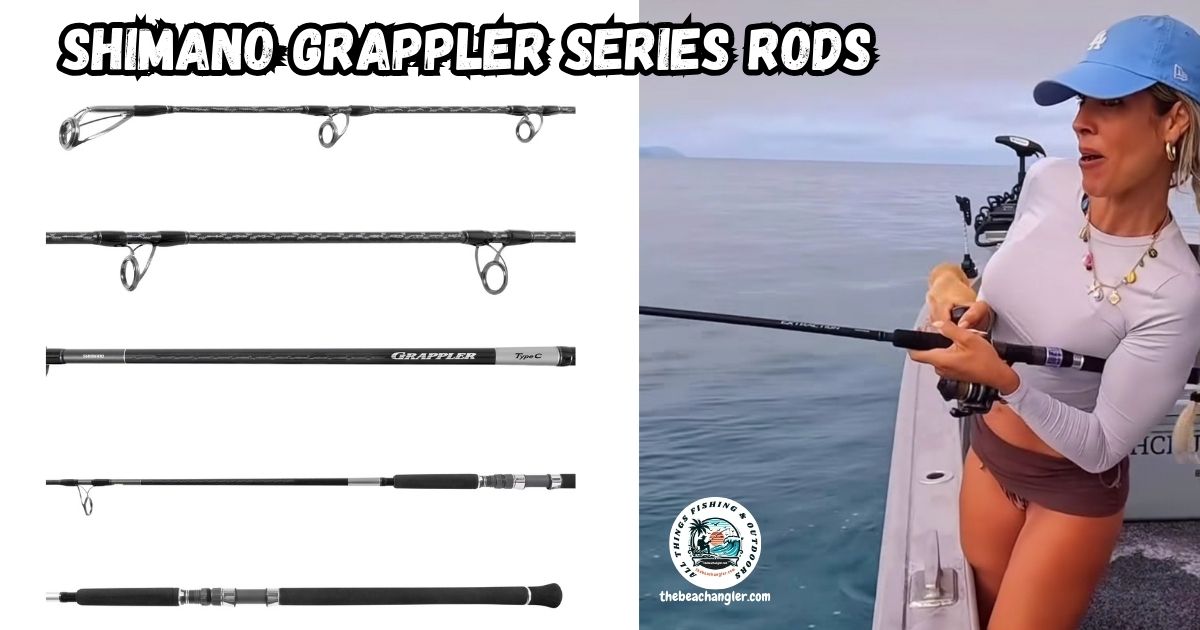
If you want a saltwater fishing rod that’s both sensitive and powerful, the Shimano Grappler Series deserves a close look. I often reach for rods that feel light in hand but give me the backbone and control I need when the bite is on.
QUICK LOOK: Advanced Features of the Shimano Grappler Series Rods
- Spiral X Construction: This tech layers carbon tape tightly in opposite diagonal directions down the rod blank. Doing so boosts both torsional rigidity (how well the rod resists twisting) and compression strength. According to Shimano, Spiral X construction can make a rod up to 250% stronger against twisting and up to 180% better at handling crushing force, compared to many regular blanks.
- HiPower X: This is the second step in the blank’s makeup. Shimano wraps an extra layer of carbon tape around the outside of the rod blank in an X pattern. HiPower X helps keep the blank from flattening out or deforming (what they call ovalization) under heavy load.
- CI4+ Reel Seats: Many Grappler models use Shimano’s proprietary CI4+ carbon composite material in the reel seats. These help me feel the softest strikes while cutting down on weight. On the water, this gives me a more direct connection between my hands and what’s happening at the other end of the line.
- Fuji Alconite Guides with SiC Tips: These guides are smooth and handle braided lines with no problem. The SiC tips cut down on line wear and help with smooth casting and retrieval. I’ve found the guides don’t add bulk and keep my line moving without friction.
- EVA Handles: The handles are comfortable, grip well when wet, and don’t easily slip even when I’m fighting big fish with sweaty hands. The overall ergonomics let me fish longer without my hands getting tired.
The Grappler lineup stands out for how it mixes innovative technology, practical comfort, and true versatility, especially for anglers chasing offshore and nearshore action. Here, I’ll share my practical experience with the series and cover what sets these rods apart, how they handle real fishing scenarios, and things to look out for before buying your own.
Overview: What Are Shimano Grappler Series Rods?
The Shimano Grappler Series targets saltwater anglers who want high-end performance without sky-high prices. The series covers everything from casting lures from the rocks or popping for tuna, to vertical jigging for amberjack or snapper.
These rods are known for being incredibly lightweight, easy to handle, and forgiving during long casting or jigging sessions. Shimano uses advanced blank construction to balance strength and sensitivity, which helps both weekend fishers and tournament anglers stay confident, even during tough fights.
The Grappler range isn’t limited to one style. There are Type C Spinning rods for casting, Type J models for vertical jigging, and Type LJ rods built for slowpitch techniques. You’ll also find three-piece travel variations that are easy to transport without losing much in the way of feel or power. In all these, you’ll see a focus on modern materials, careful attention to balance, and thoughtfully chosen components that really make a difference on the water.
Shimano’s Key Rod Technologies: Spiral X & Hi-Power X
I’ve noticed that the real secret behind the Grappler’s performance comes from how Shimano builds the rod blanks. Instead of standard graphite, Shimano uses a pair of proprietary construction methods: Spiral X and HiPower X, which give these rods unique strength and crisp action.
- Spiral X Construction: This tech layers carbon tape tightly in opposite diagonal directions down the rod blank. Doing so boosts both torsional rigidity (how well the rod resists twisting) and compression strength. According to Shimano, Spiral X construction can make a rod up to 250% stronger against twisting and up to 180% better at handling crushing force, compared to many regular blanks. This lets me put more pressure on big fish without adding any clunky weight.
- HiPower X: This is the second step in the blank’s makeup. Shimano wraps an extra layer of carbon tape around the outside of the rod blank in an X pattern. HiPower X helps keep the blank from flattening out or deforming (what they call ovalization) under heavy load. The rod recovers quickly from bends, which definitely helps me steer fish with more control.
Together, these features let Shimano build rods that feel really light yet somehow transmit every little tap, making it easier for me to work a lure and react quickly when it matters most. These technologies are seen throughout the Grappler lineup, no matter which model or action you pick.
Components & Comfort: What Makes Grappler Rods User-friendly?
It’s one thing for a rod to fish well, but I pay close attention to how it feels during long sessions. Shimano gives the Grappler series a few upgrades that keep them comfortable and responsive:
- Fuji Alconite Guides with SiC Tips: These guides are smooth and handle braided lines with no problem. The SiC tips cut down on line wear and help with smooth casting and retrieval. I’ve found the guides don’t add bulk and keep my line moving without friction.
- CI4+ Reel Seats: Many Grappler models use Shimano’s proprietary CI4+ carbon composite material in the reel seats. These help me feel the softest strikes while cutting down on weight. On the water, this gives me a more direct connection between my hands and what’s happening at the other end of the line.
- EVA Handles: The handles are comfortable, grip well when wet, and don’t easily slip even when I’m fighting big fish with sweaty hands. The overall ergonomics let me fish longer without my hands getting tired.
Some users have pointed out that certain models, especially when used at the top end of their rated power, may show some wear on the EVA grips or that the handle diameter feels slim if you have larger hands. For me, that simply means it’s worth double-checking grip size before deciding which model matches your fishing style best.
Popular Grappler Models: Reviews from RealWorld Use
The Grappler series covers a wide range of models. Based on my experience and what I’ve learned from fellow anglers, here’s what stands out with each popular type:
Shimano Grappler Type C Spinning (ThreePiece & Conventional)
- Pros: These rods are great for long casts with stickbaits or poppers. I’m impressed by how light they feel, especially when I’m casting for big pelagics like kingfish or GTs. The three-piece version is handy when traveling, but it still feels tight and responsive, almost like a one-piece.
- Cons: Some friends with bigger hands have said the handle feels on the slim side, which can be tricky during all-day trips. I would recommend checking the grip before buying if you like chunkier handles.
Shimano Grappler Type J (Jigging)
- Pros: Designed for vertical jigging, these rods surprise me with their power-to-weight ratio. I can lean into fish with confidence, and the extra sensitivity in the lighter models means I don’t miss subtle bites. The backbone is reliable when I need to pull fish away from reef or structure fast.
- Cons: I’ve noticed that if the rod is pumped incorrectly, especially during a big fish fight, the foregrip may flex more than I expect. Some users also say the grip can show some wear if used heavily over time, but this hasn’t been a dealbreaker for me.
Shimano Grappler Type LJ (Light Jigging, Including Slow Pitch)
- Pros: The Slow J models are all about touch, offering a soft tip and very parabolic action. For technical jigging where I need to feel small changes in a lure’s action, the Grappler Type LJ is a top pick. They’re super light, fatigue is reduced, and fish-fighting control is surprisingly strong considering how light the rods are.
- Cons: The Type SJ (Slow Jigging/Slow Pitch) rods are better for working the jig than for brawling heavy fish. Some users want a longer frontlocking grip to feel more secure during powerful fights. It’s something to think about if you target fish well above the rod’s max weight rating.
Things I Check Before Picking a Grappler Rod
The Grappler series has a lot of options, but picking the right one depends on your fishing style and the size of the fish you hope to catch. Here’s what I always double-check:
- Application: Decide whether you need a casting, jigging, or slowpitch rod. Grappler models are specialized, so matching the rod type to your main technique makes your choice easier.
- Length and Transport: If I plan to travel or hike in, I like the three-piece rods for easy packing. The two-piece handle split setup on many models makes the rods feel almost like a single piece when fishing.
- Handle Comfort: Make sure the grip diameter and overall handle length fit your hands and fishing habits. This is important during longer fishing sessions.
- Line and Lure Rating: Check the rod’s rated range for braid and lure weight. Staying within this range not only extends the rod’s life but also gets you the best performance.
- Component Durability: Look for reviews or firsthand reports on long-term wear, especially on the EVA grips and guides. User feedback is helpful to set real expectations.
Foregrip Durability
Most Grappler rods hold up well during normal use. That said, a few experienced anglers have pointed out that on heavier fights, the foregrip might show some flex or faster wear, especially if you highstick (raising the rod above a safe angle). Paying attention to fighting technique and rod angle helps avoid this issue and keeps the rod feeling solid year after year.
Model Choices and Price
The Grappler series is priced in the upper midrange compared to many saltwater rods. For me, the value is clear given the modern construction, lightweight, and proven components. I see these rods as a step up for serious saltwater anglers, but they aren’t so expensive that casual fishers can’t enjoy them. Warranty coverage and Shimano’s good track record with repairs or replacement give added peace of mind for your more valuable gear.
Advanced Techniques and Tips for Grappler Rods
After using several Grappler rods, I’ve learned a few tricks to get even more out of them:
- Work the Whole Rod: These blanks are made to flex and recover quickly, so I adjust my fighting style to take advantage of that. Applying steady pressure and letting the rod do the work helps land fish faster and avoid damage to the blank.
- Match Jigs and Lures Closely: Precision in lure weight brings out the best action from the rod. I always double-check that my lures match the rod’s rating for casting and jigging.
- Use Braided Line: The Grappler’s guides and tip handle modern, thin braided line well. Braid cranks up both line capacity and sensitivity, letting me feel light bites and control tough runs.
- Rinse and Check: After trips, I rinse the rod, especially the guides and reel seat, with freshwater. This helps keep salt from breaking down components and keeps my rod working like new every trip.
Practical Applications: RealWorld Performance
On the water, the Grappler series wins me over with how quickly I can spot subtle bites, set hooks, and direct fish away from rocks or wrecks. During trips targeting snapper on jigs or long days casting stickbaits for tuna, the rod never becomes a burden. In fast-action scenarios, the blank’s sensitivity and quick recovery keep me in control and help me land more fish.
I’ve seen others use these rods on everything from Spanish mackerel to big kingfish, and everyone seems to agree that the Grappler combines smooth casting and easy handling with more than enough muscle when you need it most. For anyone who values lightweight, crisp feedback, and modern design during saltwater outings, the Shimano Grappler is a practical choice that keeps up in high-demand situations.
Frequently Asked Questions
Here are some common questions that come up about the Shimano Grappler Series rods:
Do I need to use special reels or lines with these rods?
You don’t need special reels, but pairing a high-quality spinning or jigging reel and premium braid gets the most out of the Grappler’s sensitivity and casting ability. The guides are designed to be braid-friendly for smooth, long casts and crisp hooksets.
Will the three-piece models lose sensitivity compared to one-piece rods?
In my experience, the three-piece Grappler rods come very close to the feel and sensitivity of traditional one-piece rods. Shimano’s joint design keeps the action tight, so I don’t notice much difference during real fishing.
How do I pick the right model for my fishing?
Match your main technique to the rod type—Type C for casting, Type J for vertical jigging, and Type LJ for slow pitch or finesse jigs. Then make sure the rod’s length, grip style, and line/lure ratings fit your normal fishing conditions and target species.
Final Thoughts on the Shimano Grappler Rods
The Shimano Grappler Series gives practical, modern tech and comfort for serious saltwater anglers. Careful model selection, real-life durability, and a focus on rod feel and control keep me reaching for my Grappler every season.
As always, stay safe, enjoy the journey, and please try to leave it cleaner than you found it. If you have any comments, questions, ideas, or suggestions, please leave them in the comment section below, and I’ll get back to you ASAP. You can follow us on Facebook: Rex The Beach Angler, Instagram: thebeachangler7, Twitter: @AnglerBeach, and YouTube: Man Art Creations.
Check Out Our Most Recent Articles:
- Shimano Tiagra Reel Review
- The Daiwa Exist Spinning Reel
- Shimano Spheros SW Spinning Reel
- Daiwa Emcast Surf Rod Review
- The Shimano Socorro SW Spinning Reel
- Daiwa Sealine Surf Rod Review
P.S. Thanks so much for checking out our blog; we really appreciate it. Just so you know, we may receive a commission if you click on some of the links that appear on our site. This helps us keep our content free and up-to-date for everyone. We appreciate your support!





A life long surf fisherman with 50+ years of experience, I am also an avid hunter and outdoorsman. I will be sharing my passion for the outdoors with you so be prepared for hunting, fishing, camping, hiking and more. Along with gear reviews and the latest trends and innovations in the outdoor industry.