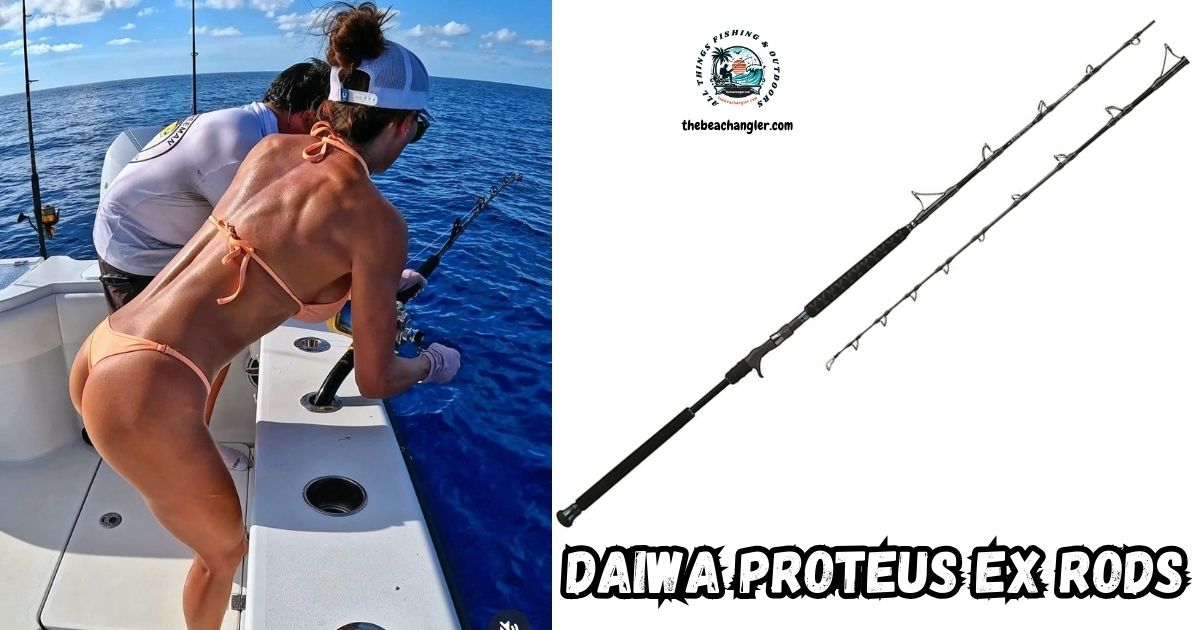
Daiwa Proteus EX Rods offer a performance-oriented solution for anglers who take saltwater fishing seriously. Designed specifically for targeting large offshore gamefish, these rods use advanced carbon technology to deliver power and sensitivity without unnecessary weight.
From my time with a range of saltwater rods, the Proteus EX series gets noticed for combining lightweight handling with the backbone needed for tough battles against big fish. In this guide, I’ll break down what sets these rods apart, the technologies behind them, and who they best suit—helping you decide if they’re a fit for your next trip offshore.
Key Features and Construction
Modern rod building is all about balancing strength with finesse. Daiwa Proteus EX rods catch attention thanks to a mix of top-shelf materials and a few clever engineering choices. Here’s what the series brings and why each part matters on the water.
- HVF Nanoplus Graphite Blank: The blank is the backbone of any rod. Here, Daiwa uses High Volume Fiber (HVF) Nanoplus carbon, where fibers are densely packed and arranged on the microscopic level. The result is a blank that feels lighter in my hand but does not sacrifice power, so I can react swiftly to bites and handle tough fights with less strain.
- X45 Bias Construction: Rods often twist or flex in awkward ways during strong runs or quick hooksets. The X45 design orients the carbon fibers at opposing angles, resisting ovalization and keeping the rod’s shape consistent. From my experience, cast accuracy is noticeably improved, especially when placing baits in rough surf or swift current.
- Spiral Cord Wrapped Foregrip: Daiwa adds a texturized, heat-shrink-wrapped grip at the front, which helps keep my hand steady even when wet. If you regularly fish with bait or lures that build up slime and grime, this grip feels especially practical and reliable.
- High Quality Guides: Most models feature Fuji Guides with Alconite inserts, known for smoothness and corrosion resistance. Spiral-wrapped models use even more durable Silicon Nitride (SiC) guides. These help lines—whether mono or braid—slide smoothly and cut down on line wear during those drawn-out fish battles.
- Techniquespecific Models: Options are tuned for live bait fishing, surface irons, night jigging, and even light rail techniques common on the West Coast. I’ve tried multiple models, and each action is tailored to its use, which helps take the guesswork out of choosing the right rod.
What I Like About the Daiwa Proteus EX Series
When you pick up a rod in the upper-mid price tier, it should feel quality and inspire trust. For me, the Proteus EX rods deliver on weight, comfort, and confidence during hard-fighting fish encounters.
- Lightweight with Power: The HVF Nanoplus build eases the strain on my arms over long trips. I can move fast to set the hook, but there’s power to keep big yellowtail, tuna, or even that surprise marlin in check.
- Superb Casting and Control: X45 construction matched with the cord-wrapped grip ensures consistent casting. My hands stay fresh longer, even through hours of lure work, and the grip holds even when my gloves are wet.
- Durable Components: The Fuji guides and sturdy reel seat mean less time worried about corrosion or failing parts—especially important when using braid in harsh saltwater.
- Versatility Within the Range: From calico bass in the kelp to deep nighttime jigging for tuna, there’s a model in the Proteus EX lineup for each style. No need to swap brands or product families.
Common Limitations: What to Know Before You Buy
Even with a strong reputation, there are a few things I recommend considering before buying a Proteus EX rod.
- Potential Fragility: The blank is robust for typical use, but reports from some anglers mention breakages if the rod is banged against hard surfaces or handled roughly. I’m gentle with high-strain graphite, but if you have a tendency to stash gear carelessly, keep this in mind.
- Specialization Could Limit You: Models are tuned for precise regional styles like West Coast live bait or surface iron casting. If you want an all-purpose rod, you’ll need to dig into which one in the Proteus EX line is versatile enough for you.
- Price Point: These rods start around $380 USD, which is higher than many beginner saltwater rods. Anglers who only fish a few times annually may find this a bigger investment than necessary.
Daiwa Proteus EX vs. The Competition
The saltwater rod market is filled with strong contenders: Shimano, St. Croix, and G. Loomis are all trusted names. I’ve cast rods from each, and here’s how the Proteus EX stacks up based on my use and what I hear from others:
- Tech and Build Quality: The combination of HVF Nanoplus and X45 puts the Proteus EX right up front for a featherweight feel and fighting muscle. Shimano’s Teramar or St. Croix Seage run similar high-quality blanks, but the EX feels quicker in my hands.
- Value in Use: For hardcore live bait or surface iron fanatics, the Proteus EX models deliver spot-on performance. Pricewise, it’s up there—like G. Loomis—but Daiwa gives you components that feel every bit as solid and premium.
- Brand Identity: Daiwa has a reputation for forward-thinking carbon blanks. While St. Croix may be more famous for durability, Daiwa holds court for lightness and new tech, earning strong marks from veteran anglers.
- Regional Fit: Fishing in California or the nearby coast, Daiwa’s models for light rail or surface iron fit local tactics better than many general-use rods. This local approach is great if you’re sticking to those methods frequently.
Choosing the Right Model for Your Style
With so many models in the Proteus EX line, narrowing it down might feel tricky. I recommend starting with your main fishing style. If drifting live sardines for yellowtail, go for the “Live Bait Special” models with moderate-fast action.
Need backbone and speed for iron jigs? Pick the “Surface Iron” models, which offer a snapper tip and length for distance casting. For dark hours and vertical jigging, heavier-rated night jigging options are the way to go.
Length is also important—longer rods give you more casting range and manage line angles in a crowded rail, while shorter rods are superior for vertical jigging and close combat at the boat. Balance power, action, and length according to the target species to make picking the right rod simpler.
Tips to Make the Most of Your Daiwa Proteus EX Rod
To truly get the most out of these rods, it’s about matching with the right reel, caring for basics, and choosing the right line for your needs.
- Pair with a Quality Reel: I always match my Proteus EX with a lightweight but reliable saltwater reel, making sure the drag pairs well with my chosen rod and target. This keeps things balanced so I can fish for hours comfortably.
- Choose Braid or Quality Mono: The Fuji guides handle both braided and mono lines with ease. In heavy cover, I prefer braid for abrasion resistance, but I’ll switch to a mono topshot if I need stealth close to the bait.
- Rinse and Store Well: Salt and sand are rods’ worst enemies. Rinse thoroughly, hit every guide and the grip, and store them out of direct sun in a padded bag once home. This prevents wear and keeps your rod looking great for years.
Frequently Asked Questions
People often ask me about the finer points of using rods like the Proteus EX. Here are the most frequent questions and my straightforward responses, both from experience and talking with other anglers.
Is the Daiwa Proteus EX suitable for beginners?
It can work for beginners ready for a step up in performance or those targeting bigger saltwater gamefish. The price, though, might be more than occasional anglers need; entry-level rods may offer better value for those just starting.
What types of fishing does the Proteus EX handle best?
These rods excel in West Coast methods—live bait fishing, iron casting, and deep jigging. If you’re into these tactics, the Proteus EX is made for you.
Any special maintenance needs?
Nothing out of the ordinary—rinse well after use, check the guides for wear, and store safely. Treat it as you would any other high-performance saltwater rod for best results.
What about warranty and support?
Daiwa provides a limited warranty for factory defects, but not for accidental damage. Hold onto your receipt and check with your local dealer for support if you’re worried about returns or breakage.
Final Thoughts on the Daiwa Proteus EX Rods
Wrapping up, Daiwa Proteus EX rods offer anglers the perfect combination of advanced blank construction and technique-driven action varieties. With careful selection and a little care, you’ll enjoy years of reliable saltwater fishing with these rods as a mainstay of your arsenal.
As always, stay safe, enjoy the journey, and please try to leave it cleaner than you found it. If you have any comments, questions, ideas, or suggestions, please leave them in the comment section below, and I’ll get back to you ASAP. You can follow us on Facebook: Rex The Beach Angler, Instagram: thebeachangler7, Twitter: @AnglerBeach, and YouTube: Man Art Creations.
Check Out Our Most Recent Articles:
- Emerging Trends In Saltwater Fly Fishing
- How To Choose A Saltwater Fishing Rod
- The Daiwa KAGE Inshore Rods
- Daiwa Free Swimmer Spinning Reel
- Daiwa Blackline Inshore Rods
- The Daiwa Saltist Back Bay Spinning Reel
P.S. Thanks so much for checking out our blog; we really appreciate it. Just so you know, we may receive a commission if you click on some of the links that appear on our site. This helps us keep our content free and up-to-date for everyone. We appreciate your support!





A life long surf fisherman with 50+ years of experience, I am also an avid hunter and outdoorsman. I will be sharing my passion for the outdoors with you so be prepared for hunting, fishing, camping, hiking and more. Along with gear reviews and the latest trends and innovations in the outdoor industry.