
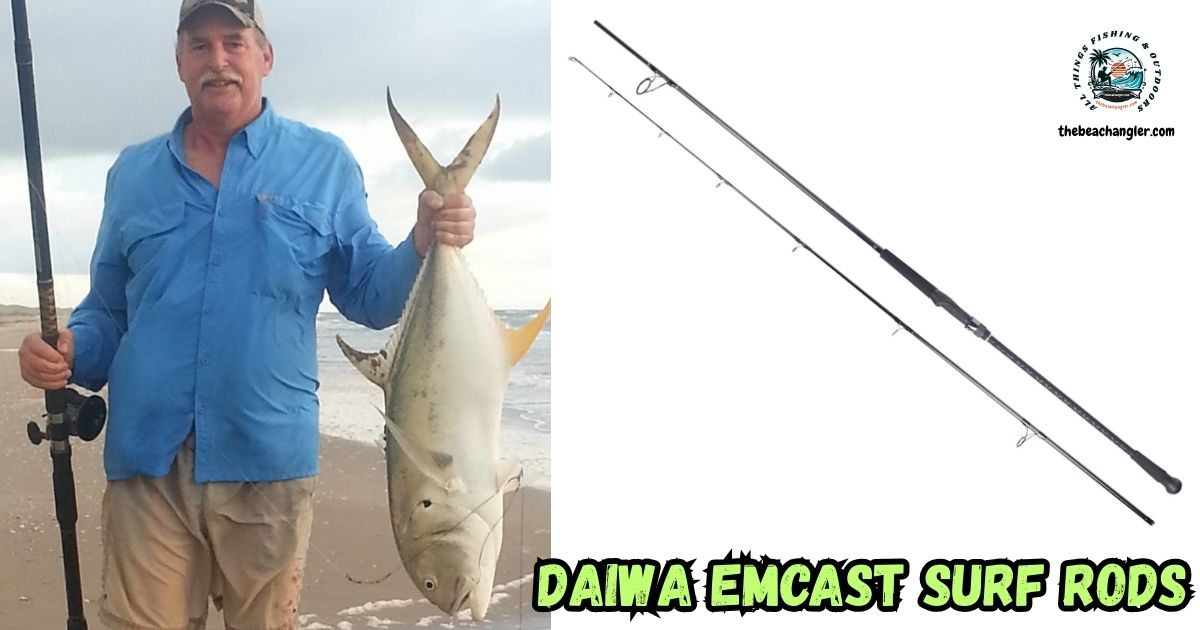
The Daiwa Emcast Surf Rod is a solid option if you want a budget-friendly surf rod that still packs performance for long-distance casting. After spending several seasons surf fishing along open coastlines and fishing jetties, I’ve gotten a real sense of what makes a surf rod comfortable and versatile. The Emcast series hits that balance of affordability, strength, and everyday comfort that’s really important for anglers who put in long hours chasing big fish.
Daiwa Emcast Surf Rod: Quick Overview
QUICK LOOK
Daiwa built the Emcast Surf Rod to provide a lightweight rod that can sling baits a long way while offering good sensitivity. The backbone is strong enough to deal with hard-fighting surf species common along both coasts, but the rod remains light enough that I can cast for hours without dealing with sore wrists and shoulders. The two-piece design makes it practical to transport, and I’ve found it easy to slide into the car or store it in the garage.
The Emcast lineup comes in several lengths and power ratings, so I can pick a model that matches my local conditions and target fish. Each rod is constructed from graphite blanks, which helps if I need to feel subtle bites or notice changes in the bottom while fishing live bait or jigs.
Core Features and Specs
Daiwa focused on practical features with the Emcast Surf Rod. Here’s what stands out to me when it comes to design and day-to-day use:
- Graphite Blank Construction: Stays light in the hand and gives me a fast, responsive action. I notice it really helps pick up quick hits from species like pompano and whiting.
- Aluminum Oxide Guides: The guides are smooth and reduce friction, which I’ve noticed helps me cast both braid and mono a good distance. Some longer models include oversized guides that further help with line flow.
- High-Densitytrade-offs EVA Grips: Comfort is super important for me when casting a lot. These grips stay nonslip even when wet, and I don’t end up with blisters after a long morning.
- Ergonomic Hooded Reel Seat: Locking the reel down feels secure, and my hand fits naturally around the seat. It’s subtle, but I’ve realized just how important this detail is during long sessions.
- Two-piece construction: Makes it easy to break down for storage and travel. I haven’t noticed any reduction in performance, even with the split design.
- X Tube Blank Protection (on select models): Adds a little extra peace of mind when using a sand spike or rod holder, especially since beach conditions can get rough.
Pros and Cons of the Daiwa Emcast Surf Rod
After putting the Emcast to the test in several fishing situations, here’s how I see the strengths and trade-offs:
| Pros of the Emcast Surf Rods |
|---|
| The light graphite blank makes it easy to fish all day without fatigue. |
| Good sensitivity, great for detecting lighter strikes or feeling bottom changes. |
| Enough backbone to turn medium and some larger surf species like drum and stripers. |
| Comfortable grips and secure reel seat improve handling during hard-fighting runs. |
| Reasonable price, making it accessible to new or budget-conscious anglers. |
| Cons of the Emcast Surf Rods |
|---|
| Not as strong as some high-end or composite rods; graphite can be brittle if dropped on rocks. |
| Components are solid but not premium, so forget fancy reel seats and Fuji guides here. |
| Some longer models can feel a bit ”whippy“ when casting heavy chunks or handling really big fish. |
Choosing the Right Emcast Surf Rod Model
Daiwa offers a handful of Emcast Surf Rod models with different lengths (typically 9 to 12 feet) and power ratings. Matching rod power and length to your local surf conditions and target fish really pays off in performance. For me, the mediumheavy 10foot model has been versatile, handling Gulf Coast species like redfish, whiting, and even schoolie stripers up north.
If you’re casting long distances with lighter baits or fishing calm beaches, a lighter model works well. When targeting bigger fish or using larger chunks, stepping up to a heavier model makes sense. The two-piece construction makes it easy to try a couple of lengths over time.
Frequently Asked Questions About the Daiwa Emcast Surf Rod

How does the Daiwa Emcast Surf Rod compare to more expensive surf rods?
Based on my fishing time, the Emcast gives a lot of the feel and sensitivity I like, but with less refinement in the hardware and slightly less power than true premium rods. For the price, though, it handles most everyday surf fishing tasks really well.
What reel matches best with the Emcast?
I like pairing the Emcast with a smooth mid-priced spinning reel, like the Daiwa BG or the Penn Spinfisher VI. These reels balance well with the rod’s weight and have enough drag to handle typical surf fish.
Is the Emcast rod suitable for beginners?
Yes. The Emcast is easy to cast, forgiving, and comfortable to use for long periods. Beginners benefit from its manageable weight and sensitivity, and it won’t break the bank during the learning curve.
How should I care for my Emcast surf rod?
Rinse thoroughly after saltwater use, dry the rod and guides completely, and store them in a dry place. Keep an eye on the tip and guides for chips or scratches over time.
Can this rod be used for jetty fishing or pier fishing, or is it only for surf?
While the Emcast is designed for surf casting, the twopiece build and overall strength also make it a convenient choice for jetties and piers, especially when targeting species that roam close to structure. I’d avoid using it as a heavy-duty pier rod for monster fish, but it will handle most inshore targets just fine.
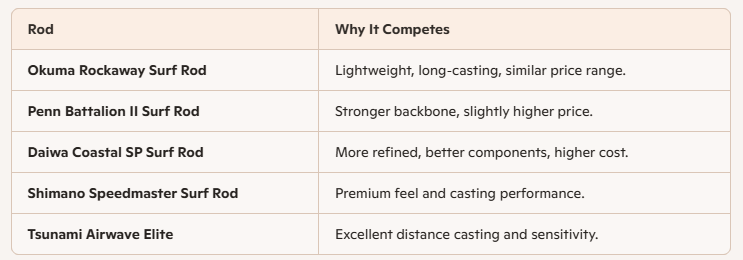
Competitors to the Daiwa Emcast Surf Rods
Recommended Use Cases and Fishing Scenarios
Based on my hands-on experience, I think the Emcast Surf Rod is a really good fit for these situations:
- Surf fishing for popular species like red drum, pompano, whiting, bluefish, and schoolie stripers.
- Long-distance casting, especially with lighter bait or lures where the rod’s fast action helps.
- Anglers who want a reliable, everyday surf rod but aren’t looking to spend over $150.
- Beginners or casual surf anglers wanting to upgrade from entry-level combos, or who just want a backup rod for friends or family.
- Travelers and weekend warriors who need a rod that’s easy to stash in a car but can still handle tough conditions.
Tips for Getting the Most Out of the Daiwa Emcast Surf Rod
A few things I’ve learned help maximize both performance and rod life:
- Match Rod Power and Line: Pair the power rating of your Emcast to your target fish and planned bait. Most models handle 2030 lb braid well, which gives good casting distance and strength.
- Pair with a Balanced Reel: I get good results pairing my Emcast with a Daiwa BG or Penn Spinfisher in the 40006500 size range, so the setup feels balanced and ready for surf conditions.
- Rinse and Dry After Saltwater Sessions: Even with corrosionresistant guides, I make it a habit to rinse the rod and guides with fresh water and dry completely before storing.
- Sand Spike and Rod Holder Caution: While the X Tube feature helps avoid scratches, I try to avoid jamming the rod in too hard, since graphite can chip if abused in rough sand or rocks.
Additionally, for those looking to really get into surf casting, investing in a good casting practice session on the field can make a huge difference. Spending time practicing different casting techniques, like the overhead cast and the pendulum cast, will help you reach further distances and increase your accuracy from the shore.
It’s also beneficial to learn how to manage line twist and wind knots, which can plague surf anglers using lighter braided lines. Taking a few minutes to stretch your line out and spool your reel correctly at home can save you headaches during your fishing trip.
Common Challenges and How the Emcast Handles Them
Every rod at this price has some trade-offs. Here’s what I noticed:
- Potential for Rod Tip Damage: Graphite rods excel in sensitivity but can break more easily than older, heavier fiberglass rods. I try to avoid high-sticking or whacking the tip on the roof of the car during transport.
- Handling Heavy Weights and Big Fish: The backbone is solid but not as stiff as high-end rods, so I go easy with really heavy sinkers or if I’m targeting big rays or sharks. For typical surf fish up to about 20 pounds, I haven’t had issues.
- Guide Durability: Aluminum oxide guides are smooth and resist most corrosion. Over time, I check for nicks or wear to avoid line damage.
One other challenge surf anglers encounter is dealing with harsh environmental factors like salt, wind, and sand. Over time, these elements can cause wear on even the best rods. The Emcast Surf Rod’s materials and finish give good protection, but a little attention after each trip—such as removing the butt cap and flushing the interior with clean water can further extend the rod’s reliable use.
Sometimes anglers notice that their rod’s finish begins to dull or chip due to sand abrasion. Rubbing the blank gently with a microfiber cloth can help keep things looking clean, and a very light spray of reel maintenance oil (avoiding the grips and guides) can offer additional protection against corrosion.
Final Thoughts on the Daiwa Emcast Surf Rod
If you’re looking to get into surf fishing or need a reliable backup rod, the Daiwa Emcast Surf Rod is a comfortable, budget-friendly surf rod that doesn’t skimp on performance. It feels responsive in hand, casts a long way, and stands up to regular use for a wide range of coast species.
Careful handling and regular cleaning keep it performing season after season. Whether you’re just starting or adding to your lineup, the Emcast is a straightforward, practical choice that makes surf casting more accessible. Plus, with a variety of lengths and powers to choose from, you can find a model that fits your fishing environment. With proper care, this rod will give you plenty of memorable shore adventures for years to come.
Check Out Our Most Recent Articles:
- The Okuma Cavalla 2 Speed Lever Drag Reel
- Berkley Gulp Ripple Mullet
- Seviin GW Series Spinning Reels
- New Mirrolure Chameleon Series Lures
- Field-testing The Quantum Benchmark Spinning Reel
- Z-man Swag Lt Swimbait
As always, stay safe, enjoy the journey, and please try to leave it cleaner than you found it. If you have any comments, questions, ideas, or suggestions, please leave them in the comment section below, and I’ll get back to you ASAP. You can follow us on Facebook: Rex The Beach Angler, Instagram: thebeachangler7, Twitter: @AnglerBeach, and YouTube: Man Art Creations.
P.S. Thanks so much for checking out our blog; we really appreciate it. Just so you know, we may receive a commission if you click on some of the links that appear on our site. This helps us keep our content free and up-to-date for everyone. We appreciate your support!






A life long surf fisherman with 50+ years of experience, I am also an avid hunter and outdoorsman. I will be sharing my passion for the outdoors with you so be prepared for hunting, fishing, camping, hiking and more. Along with gear reviews and the latest trends and innovations in the outdoor industry.